
Introduction
The Pay-Off occupies a curious space in early sound cinema, a 1930 pre-Code crime drama that bristles with the moral ambiguity and urban undercurrents often associated with the later film noir movie. Directed by Lowell Sherman, who also plays the sophisticated criminal leader Gene Fenmore, the film adapts the 1927 stage play Crime by Samuel Shipman and John B. Hymer. The Pay-Off may not be cataloged among canonical noirs, yet its ethical complexity, its city-bound violence, and its shadowy social milieu make it essential study for anyone tracing the evolution of the film noir movie sensibility in American cinema.
Outline
- Historical context and the film's place in early sound cinema
- Plot synopsis and ethical center
- Main performances and character dynamics
- Direction, screenplay, and theatrical origins
- Pre-Code freedoms and proto-noir elements
- Key scenes and visual moments with screenshots
- Legacy, remake, and public domain status
- Why the film still matters for lovers of crime cinema and film noir movie studies
Historical context and the film's place in early sound cinema
The Pay-Off premiered in 1930, at the moment when American filmmaking was transitioning from silent expression to the rhetorical density of sound. That transition produced films whose dialogue-heavy scenes and theatrical roots reveal the influence of the stage. The screenplay credits Jane Murfin, Samuel Shipman, and John B. Hymer, and the film draws directly from Shipman and Hymer's 1927 play. The presence of stage-adapted dialogue and concentrated interiors contributes to the film's tone, a tone that often anticipates the spoken rhythms and moral fatalism that would define the film noir movie decades later.
Lowell Sherman was a dual force as both director and lead actor. That combined role sharpens the film's focal point: a crime drama concerned less with sensational spectacle and more with character and code. The ethical strictures and the uneasy interplay between society's polish and criminal enterprise anticipate the noir fascination with the fissures beneath urbane facades. For historians and critics tracing the film noir movie lineage, The Pay-Off functions as one of the early texts that display noir-like moral dislocation while remaining technically and aesthetically anchored to the pre-Code era.
Plot synopsis and ethical center
The Pay-Off centers on Gene Fenmore, a gentleman of high social standing whose outward respectability masks his role as leader of a major criminal syndicate. Fenmore's organization operates by a peculiar ethic: they prey only on dishonest businessmen and invoke a strict prohibition against killing. That self-imposed code sets the stage for the film's central conflict when Rocky, the second-in-command, rejects the constraints and stages a reckless robbery that ends in murder. The ethical rupture drives the narrative and compels Fenmore into a dangerous moral reckoning.
Two young people, Nancy and Tommy, serve as crucial moral fulcrums in the story. After Rocky steals the couple's modest savings as a prank, Fenmore returns the money and offers them legitimate work. That gesture creates an emotional and ethical investment that exacerbates the rivalry between Fenmore and Rocky. When Rocky involves the young couple in an ill-fated jewelry heist, and the shop owner is killed, the consequences are severe. Rocky frames the young couple for the crime, and the spiral that follows forces Fenmore into a plan that culminates in a staged confession and a violent denouement.
The ethical center of The Pay-Off is less about legal culpability and more about codes of honor among thieves. Fenmore's leadership is defined by an insistence on restraint and strategy. When the gang's strictures fail, Fenmore orchestrates a radical corrective. His final words, a line that crystallizes the film's moral ambiguity, are telling: "If it wasn't for men like me, they wouldn't need men like you." The line frames a worldview in which crime and law enforcement exist as mutually dependent social functions, a bleak reciprocity that anticipates later noir fatalism in the film noir movie tradition.
Main performances and character dynamics
The cast list reads like a study in functional archetypes, yet several performances bring unexpected warmth and depth to archetypal parts. Lowell Sherman plays Gene Fenmore, the urbane gang leader who negotiates between criminal expedience and a personal code. Sherman's portrayal emphasizes composure and calculation. The part requires a delicate balance: he must seem both the gentleman of society and the advocate for an underworld order. Sherman’s dual role as director no doubt informed his performance choices, lending Fenmore a centrality that holds the film together.
Marian Nixon is Nancy, the young woman whose innocence and energy contrast the city's harsher elements. Nixon's Nancy is not merely a damsel in distress. She represents a social element that is both naïve and resilient, a character that the film uses to expose the human cost of underworld machination. Hugh Trevor plays Rocky, the volatile lieutenant whose disdain for Fenmore's restraint drives the plot toward violence.
Supporting roles provide structural weight. George F. Marion as Mouse, a senior figure within the organization, functions as both commentary and foil to the younger men. Actors such as Walter McGrail, Robert McWade, and Helene Millard fill out the gang and social sphere, creating a populated urban world that feels lived in. Collectively, the cast produces a study in competing impulses: the gentlemanly rationality that seeks control and the raw aggressiveness that seeks domination. That opposition is at the heart of what gives The Pay-Off a proto-noir edge.
Direction, screenplay, and theatrical origins
The film's theatrical origin explains its weighted reliance on dialogue and interior settings. Jane Murfin, along with the original playwrights Shipman and Hymer, adapted the stage play, creating a screenplay that preserves concentrated exchanges and scene-to-scene moral escalation. The result feels stagey at times, but that very stagecraft allows the film to explore characters through talk and confrontation rather than spectacle. This reliance on verbal sparring and moral argumentation is a feature, not a flaw, when considering the film as a precursor to later noir tendencies.
Lowell Sherman's directing prioritizes crowded interiors and close-knit group dynamics. The camera often frames conversations as confrontations, and the editing favors sustained scenes that reveal character through pressure. That approach makes key moments — the return of the stolen money, the jewelry store heist, the internal gang tribunal — feel like moral crucibles. In short, the direction and screenplay together craft a narrative that is less interested in showy gangster glamour than in the ethical mechanisms of the underworld. That focus is one reason the film anticipates elements associated with the film noir movie form.
Pre-Code freedoms and proto-noir elements
The Pay-Off benefits from pre-Code latitude. Its moral ambiguity, frank depiction of criminal enterprise, and the implication of sexual liaisons outside conventional marriage reflect an era in which films could address adult themes without strict censorial restraint. The film treats the criminal world with a degree of complexity and ambivalence that later enforcement of the Production Code might have muted. The result is a story that refuses simple moralizing and instead insists on the complicated overlap between crime, social standing, and personal honor.
Proto-noir elements are abundant. The film interrogates the veneer of high society by revealing a criminal hierarchy operating beneath it. Gene Fenmore mingles with respectable people while managing a powerful gang. The duality between outward respectability and private corruption is a recurring theme in the film noir movie lexicon. Moreover, The Pay-Off addresses the paradox of moral codes within a criminal subculture: an insistence on no killing that is violated by emotional impatience and ego. These tensions presage the noir interest in characters who operate by personal codes that ultimately lead to self-destruction.
Key scenes and visual moments
Several scenes merit close attention for how they stage the film's ethical dilemmas and visual contrasts.
1. The park and the young couple
The opening sequences set the emotional stakes. A young couple asleep in a park, clutching dreams of marriage and a modest nest egg, creates immediate sympathy. Their world is honest and fragile, and the film uses their vulnerability to expose the underworld's callousness. The park sequence foregrounds class disparity: the couple’s $230 savings contrast with the vast fortunes that quietly accumulate in the city’s apartments.
2. The apartment and the gang's social veneer
Gene Fenmore's social circle blends high society guests and underworld associates. Scenes set at Fenmore's apartment reveal the film's fascination with dual identity. The camera lingers on dinner conversation that quickly turns to criminal planning. The sequence demonstrates how proximity to respectable society enables criminal intelligence to operate with ease.
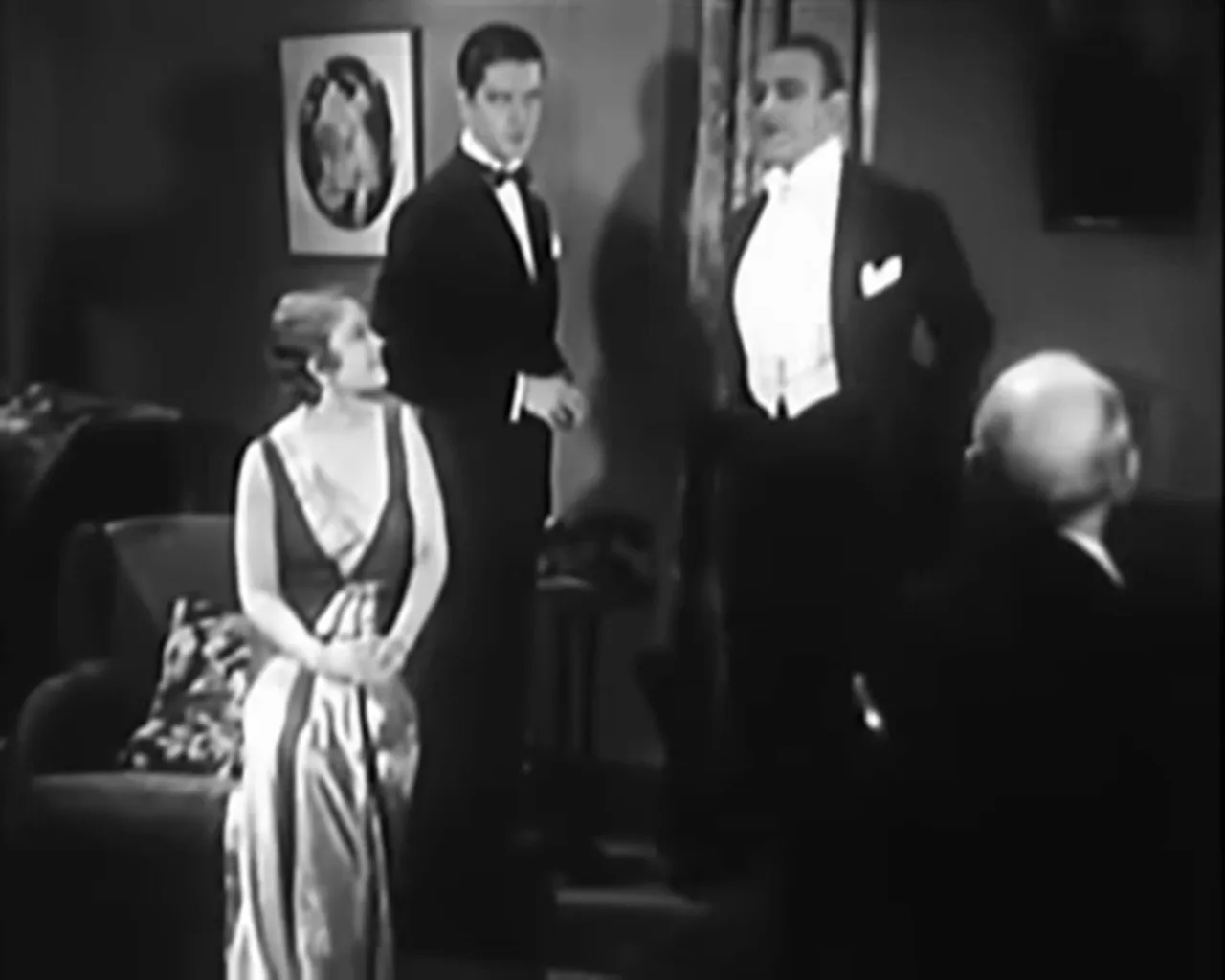
3. The jewelry store heist
The heist at Coleman's shop is the film's fulcrum. Rocky's decision to include the young couple contravenes Fenmore’s orders and transforms an already risky plan into a moral calamity. The robbery escalates into murder, and the visual economy of the store — tight counters, reflective glass, and the human scale of the shopkeeper — amplifies the tragedy. That scene also marks a tonal shift from procedural cunning to brutal consequences. The murder introduces indisputable blood that breaks Fenmore’s code and forces a decisive response.
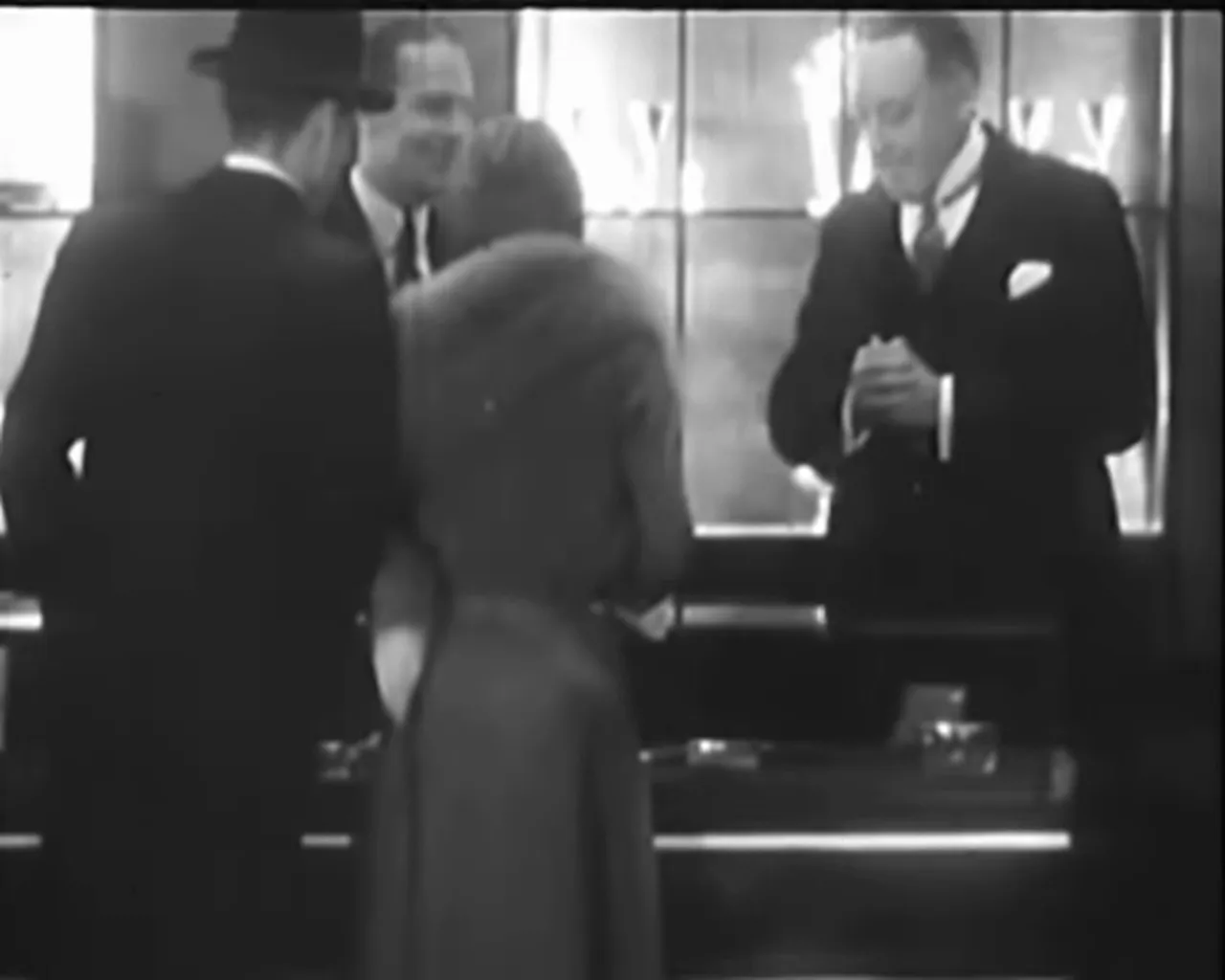
4. The gang tribunal and the confession
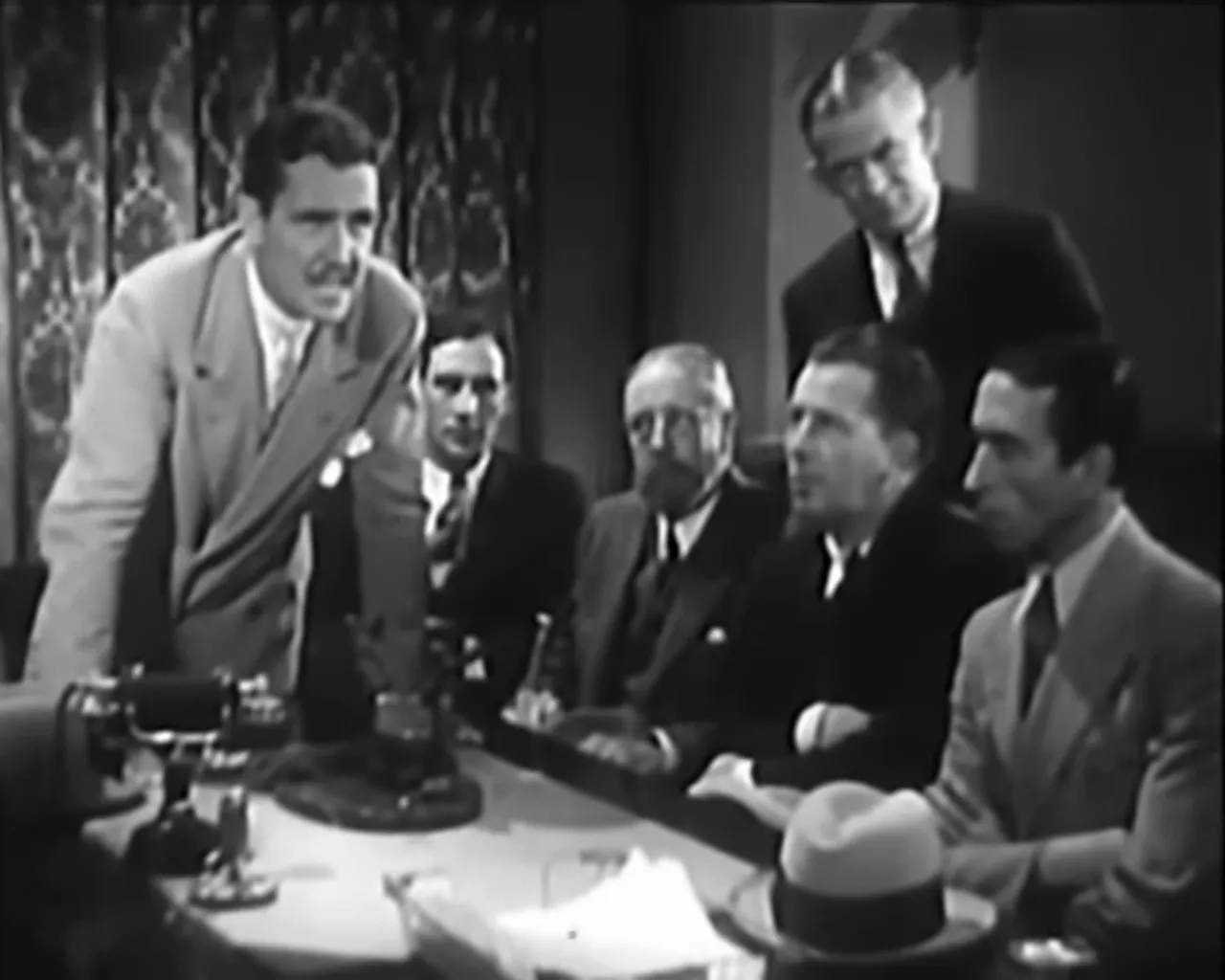
After the murder, a climactic tribunal of gang members convenes to judge Fenmore. The sequence resembles a courtroom drama within the criminal world. Fenmore uses words as weapons, arguing leadership, restraint, and the social function of his organization. The tribunal culminates in a staged confession and an engineered melee that produces Rocky's death. The denouement complicates notions of justice and exposes the films central thesis: the mutual dependence between organized crime and social order.
Film as social critique: honor among thieves and civic reciprocity
The Pay-Off presents crime as a mirror that reflects social corruption. Fenmore’s dictum that the gang hits only crooked businessmen positions him as a moral arbiter of sorts. That framing is not innocent. It raises hard questions about complicity and the legitimacy of vigilante justice. When Fenmore declares that the gang will strike only at dishonest men, the film forces an uncomfortable comparison between law enforcers and criminals. The final line, which functions like an epigraph, reverses the usual moral equation: if not for criminals, law enforcement would be redundant. This inversion is an early example of noir-style moral relativism, where lines of righteousness blur into systemic critique.
The film suggests that criminal orders and civic governance feed one another. Fenmore operates by a code that simultaneously masks ethical corruption and offers a perverse form of redress. That ambivalence — the protagonist who is both protector and predator — is a common motif in the film noir movie tradition. The Pay-Off uses this motif to stage a broader social commentary about the institutions that produce and police crime.
Legacy, remake, and public domain status
The Pay-Off’s stage origins and early sound-era production history make it a document of interest rather than a mainstream classic. Nevertheless, the film’s story and themes were deemed strong enough to warrant a remake. In 1938, RKO remade the film under the title Law of the Underworld. That decision demonstrates the narrative’s adaptability and its continued resonance within crime cinema. The tale of leadership, betrayal, and moral compromise proved durable enough to translate across studio visions.
An important legal note concerns the film’s copyright status. In 1958, The Pay-Off entered the public domain in the United States because rights holders did not renew the copyright in the 28th year after publication. The public domain status means the film is more accessible for screening, study, and restoration efforts. For scholars of the film noir movie lineage, the ease of access supports comparative analysis and scholarly dissemination.
Why The Pay-Off matters to studies of the film noir movie
The Pay-Off is significant not because it fits neatly into later noir formulas but because it anticipates them. The film is a bridge between theatrical crime drama and the cinematic moral complexity that would later be labeled noir. The following elements make it particularly relevant for anyone exploring the genealogy of the film noir movie:
- Moral ambiguity: The protagonist is criminal and reflective, enforcing a code that both justifies and conceals wrongdoing.
- Urban dualities: Respectable society overlays an organized criminal network, exposing an architecture of duplicity.
- Character-driven conflict: The story hinges on personality clashes and codes, not simply on external crime action.
- Ambiguous justice: Legal and illegal systems are bound together in uneasy reciprocity, leading to a resolution that complicates justice.
Those dimensions make The Pay-Off a useful reference when discussing the film noir movie as a category that emerged from social anxieties, economic dislocation, and stylistic experimentation. The film captures early arrangements of character and theme that later filmmakers would refine into the visual and moral grammar of noir.
Performance highlights and moments that endure
Lowell Sherman’s Gene Fenmore is a study in controlled danger. Sherman’s dual role as director and lead allows for an integrated vision: the film’s pacing and the actor’s rhythms cohere. Marian Nixon’s Nancy offers emotional ballast. Her character’s vulnerability functions as the moral center, forcing Fenmore into decisions that reveal his complexity. Hugh Trevor’s Rocky supplies raw energy and volatility, turning the film’s ethical problem into human conflict.
Particularly memorable moments include the early park scene that establishes the young couple’s stakes, the Coleman's shop sequence for its escalation into violence, and the gang tribunal that examines leadership and culpability. Each sequence serves an ethical purpose as much as a narrative one, reinforcing the film’s focus on motives and consequences.
Research note and fidelity to sources
The synopsis and critique here rely on the film’s screenplay adaptation of the 1927 play Crime and on reliable production data. Known cast members include Lowell Sherman as Gene Fenmore, Marian Nixon as Nancy, Hugh Trevor as Rocky, William Janney as Tommy, Helene Millard as Dot, George F. Marion as Mouse, Walter McGrail as Emory, Robert McWade as Frank, Alan Roscoe as the District Attorney, Lita Chevret as Margy, and Bert Moorhouse as Spat. That cast and the film’s narrative arc are documented in industry references and archival records, which confirm the structural elements that connect The Pay-Off to broader themes in crime cinema and the film noir movie tradition.
Practical viewing considerations
For those interested in viewing The Pay-Off, the film’s public domain status makes it comparatively easy to locate through archival websites and classic film repositories. When watching, focus on the film’s dialogue-driven confrontations and the way character choices replace elaborate spectacle. The Pay-Off may feel stage-bound to some viewers, but its thematic density rewards close attention.
Concluding assessment
The Pay-Off is a compelling artifact from a transitional cinematic era. It is not a film noir movie in the classic sense, because the full stylistic apparatus of noir would be assembled later. Nevertheless, its moral ambiguity, its depiction of social duplicity, and its interest in codes of honor among criminals situate it as a proto-noir exemplar. The film asks uncomfortable questions about the relation between crime and civic order and does so without easy answers. For critics, historians, and enthusiasts tracing the genealogy of the film noir movie, The Pay-Off remains an evocative and instructive text.
Notable line: "If it wasn't for men like me, they wouldn't need men like you."
Further reading and viewing suggestions
Study of The Pay-Off is enriched by comparison. Consider pairing the film with later noir classics to see how similar themes evolve into visual motifs. Also consult records of the 1927 stage play Crime to appreciate the narrative origins and how theatrical storytelling translated to early sound film. Those comparative approaches illuminate how the film noir movie sensibility emerged from pre-Code experiments in tone and moral complexity.
Final thoughts
The Pay-Off rewards viewers who seek moral ambiguity and character-driven crime drama. Its pre-Code freedom permits a candid portrayal of criminal codes and social complicity, and Lowell Sherman's steady direction keeps the film focused on ethical consequence. The film sits at a crossroads: an early sound-era drama rooted in the stage and a precursor to the darker films that would later be grouped under the film noir movie label. For anyone tracing the lineage of cinematic noir, The Pay-Off offers a compact, instructive chapter.