
Thunderbolt stands at the crossroads of silent cinema and the sound era, an audacious film that many critics now read as a proto noir film noir movie. Directed by Josef von Sternberg and released in 1929, it pairs the hulking charisma of George Bancroft with the fragile magnetism of Fay Wray and the earnest restraint of Richard Arlen. This film noir movie is less a tidy gangster yarn than an experiment in tone, texture, and the new possibilities of synchronized sound.
Overview: what makes this film noir movie notable
At its simplest, the story concerns a criminal known as Thunderbolt Jim Lang, his former lover Ritzie, and the young bank clerk Bob Moran, who becomes entangled in their orbit. Yet Thunderbolt is notable for more than plot. It is one of the earliest features to harness synchronized sound creatively, and it situates a melodramatic gangster tale within an aesthetic that would later inform noir cinema. Sternberg—already known for Underworld—stages scenes with an eye for chiaroscuro, rhythm, and aural counterpoint, making Thunderbolt a significant proto noir film noir movie.
The film was adapted by Herman J. Mankiewicz and Joseph L. Mankiewicz (titles) from a story by Jules and Charles Furthman. George Bancroft received an Academy Award nomination for Best Actor for his portrayal of Jim Lang, cementing the film's place in late 1920s American cinema.
Plot synopsis: crime, love, and a debt of conscience
Thunderbolt Jim Lang is a wanted man, accused of robbery and murder. He ventures out with Ritzie to a Harlem nightclub—the Black Cat—where she tells him she plans to go straight. During a police raid, Thunderbolt escapes, but his gang keeps tabs on Ritzie and discovers she is staying with Mrs. Moran and her son Bob, a bank clerk who loves her. Ritzie, fearing for Bob, engineers a police trap to protect him from Thunderbolt's violent world.
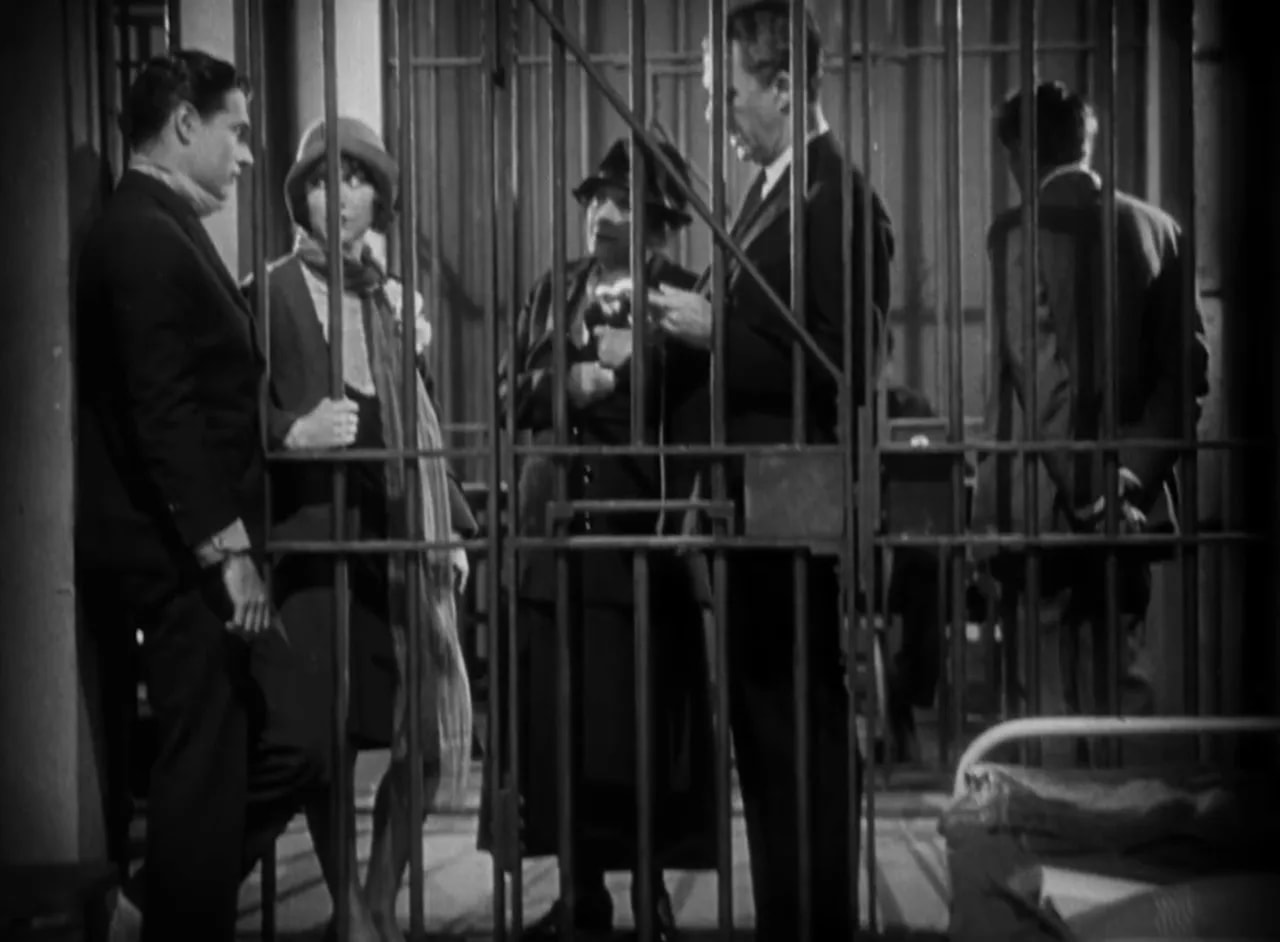
Thunderbolt is eventually captured, tried, and sentenced to be executed at Sing Sing. From his cell he orchestrates a frame-up that puts Bob in a facing death cell. Guards and fate conspire to thwart Thunderbolt's final plan, and when Ritzie marries Bob inside the death house, the criminal confesses his role in Bob's conviction. At the last minute, intent on killing his rival on the walk to the gallows, Thunderbolt's hand falls on Bob's shoulder in a gesture that becomes one of the film's most ambiguous acts of redemption.
Cast and key performances
- George Bancroft as Thunderbolt Jim Lang — the powerful center of the film, nominated for an Academy Award for this role.
- Fay Wray as Ritzie — the woman who wants normalcy and whose conscience sets the central conflict in motion.
- Richard Arlen as Bob Moran — the bank clerk whose fate becomes tragically entangled with the underworld.
- Tully Marshall as the Warden — a surprising comic touch in a grim setting.
- Eugenie Besserer as Mrs. Moran — a mother's presence anchors the film's domestic stakes.
The performances anchor Thunderbolt's tonal shifts. Bancroft's Thunderbolt is at once sentimental and brutal, capable of both tenderness toward an animal and ruthless calculation toward a rival. Fay Wray's Ritzie carries the emotional center—her desire to be “decent” and ordinary complicates the narrative and challenges the myth of the noble gangster. Richard Arlen's Bob is not a cipher but an honest man placed in extraordinary circumstances.
Black Cat nightclub: where sound and mise-en-scène collide
Sternberg stages the Black Cat nightclub sequence as a single long, audacious piece of filmmaking. It announces the director's determination to use sound not simply to record speech but to make it part of the image. The orchestra, off-stage chatter, and the on-screen action collide and overlap in ways that read like early experiments in sound design. This is where Thunderbolt functions as a proto noir film noir movie: the stagings, the shadows, and the uneasy social mix of cops and crooks prefigure the moral and visual ambiguity associated with later noir.
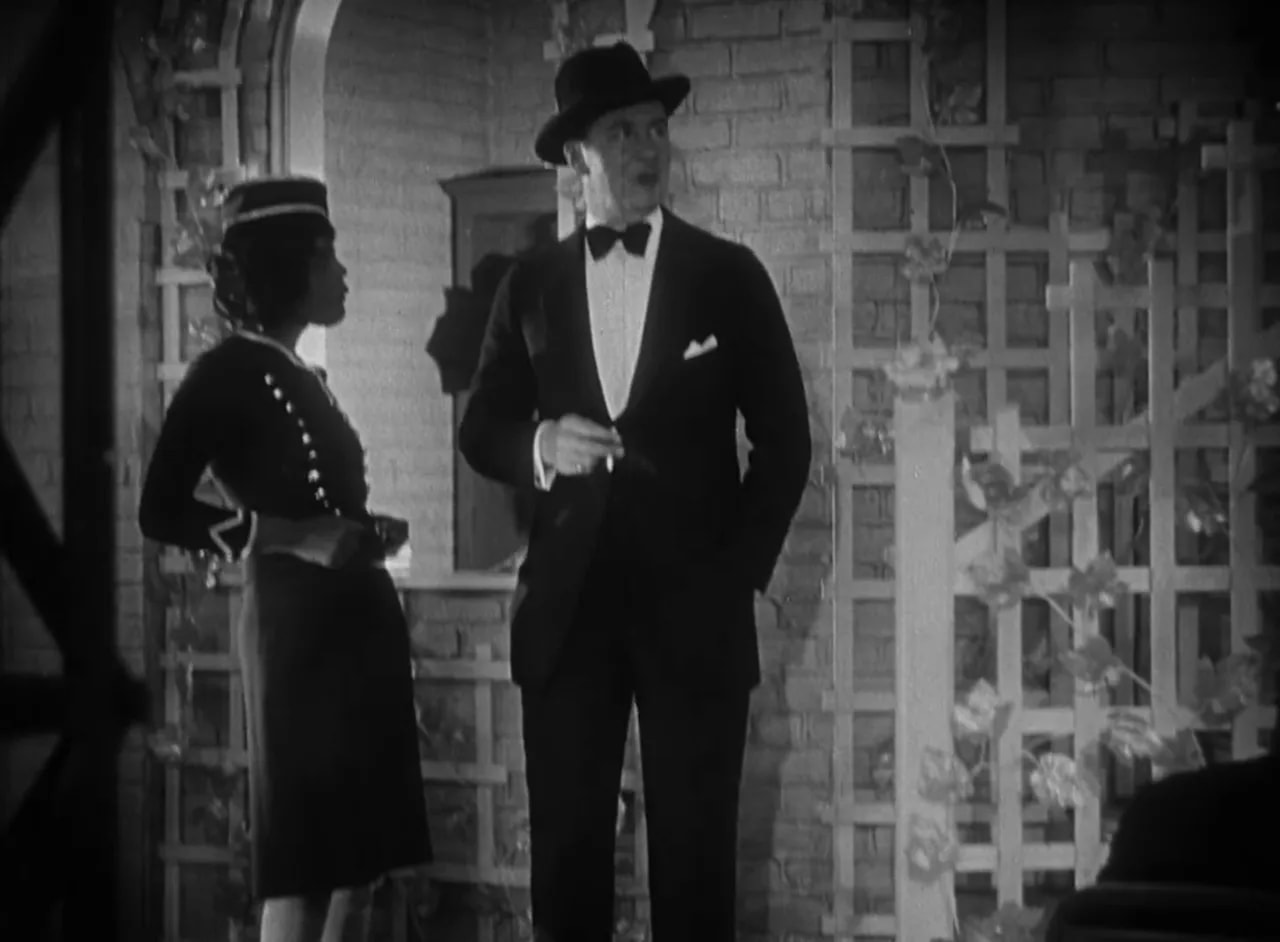
Rather than allowing music to sit politely behind dialogue, Sternberg insists it compete with speech. Chorus lines, offscreen remarks, and an ominous camera track create a texture that is both musical and cinematic. The sequence ends in a raid, where the police steps in with machine guns and the lights cut to reveal harsh, expressionist silhouettes—visuals that read like an early noir palette.
Sound as an aesthetic tool in this film noir movie
Thunderbolt is Josef von Sternberg's first full use of synchronized sound. He produced two versions—one with sound and a silent version for theaters that had not yet converted. Rather than treating sound as a simple add-on, Sternberg uses it as a compositional element. Dialogues are sometimes deferred, counterpointed by music or offscreen commentary, and asynchronous effects appear to comment on or contradict the image.
This approach makes Thunderbolt a model for how a film noir movie can use sound to create tension and mood. Instead of presenting speech as straightforward information, Sternberg layers it with singing, offscreen voices, and diegetic music that both illuminates and obscures the onscreen action. Sound here often acts like a Greek chorus: it frames the emotion and stands as a moral commentary.
Death Row as performance space
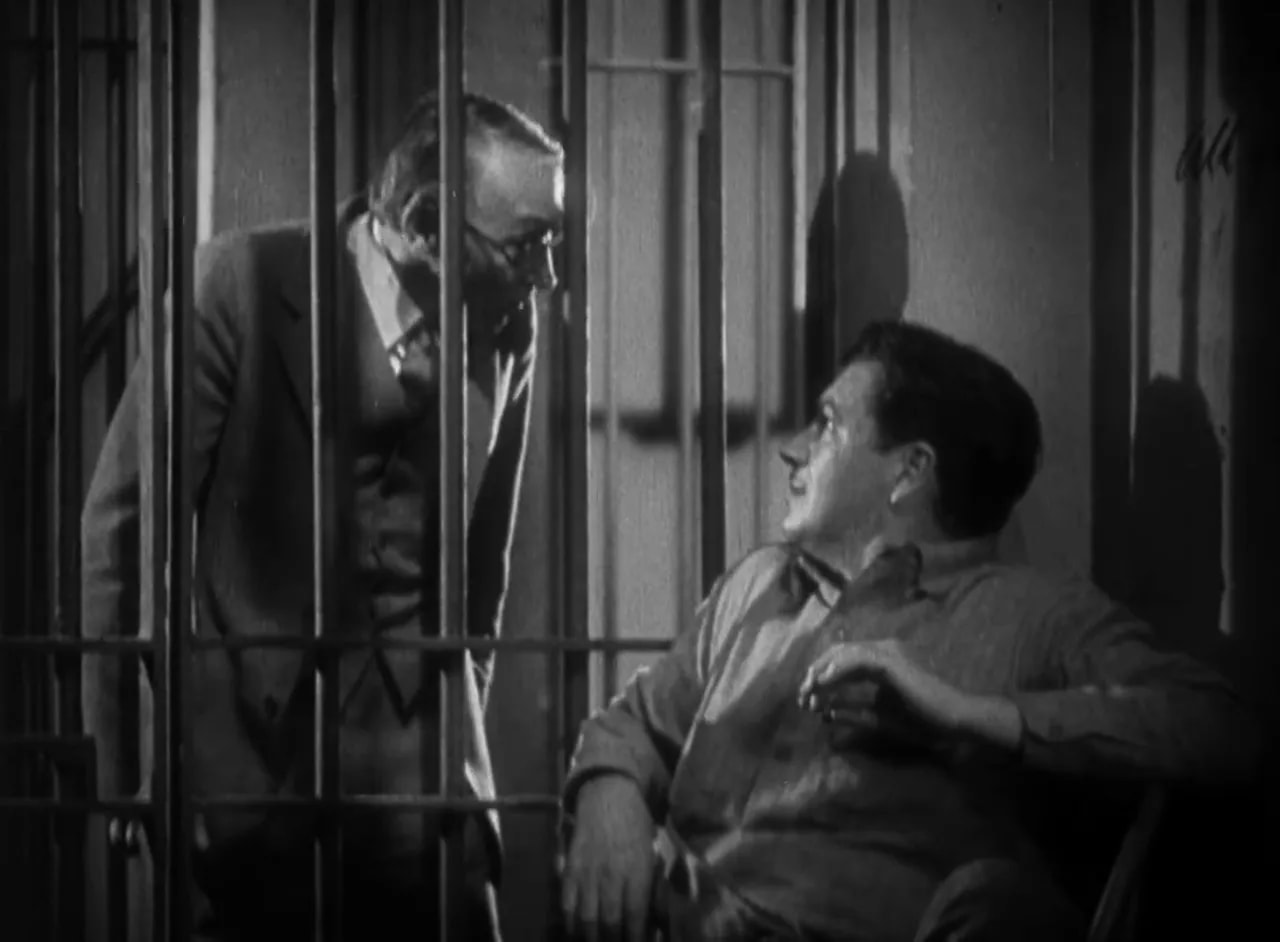
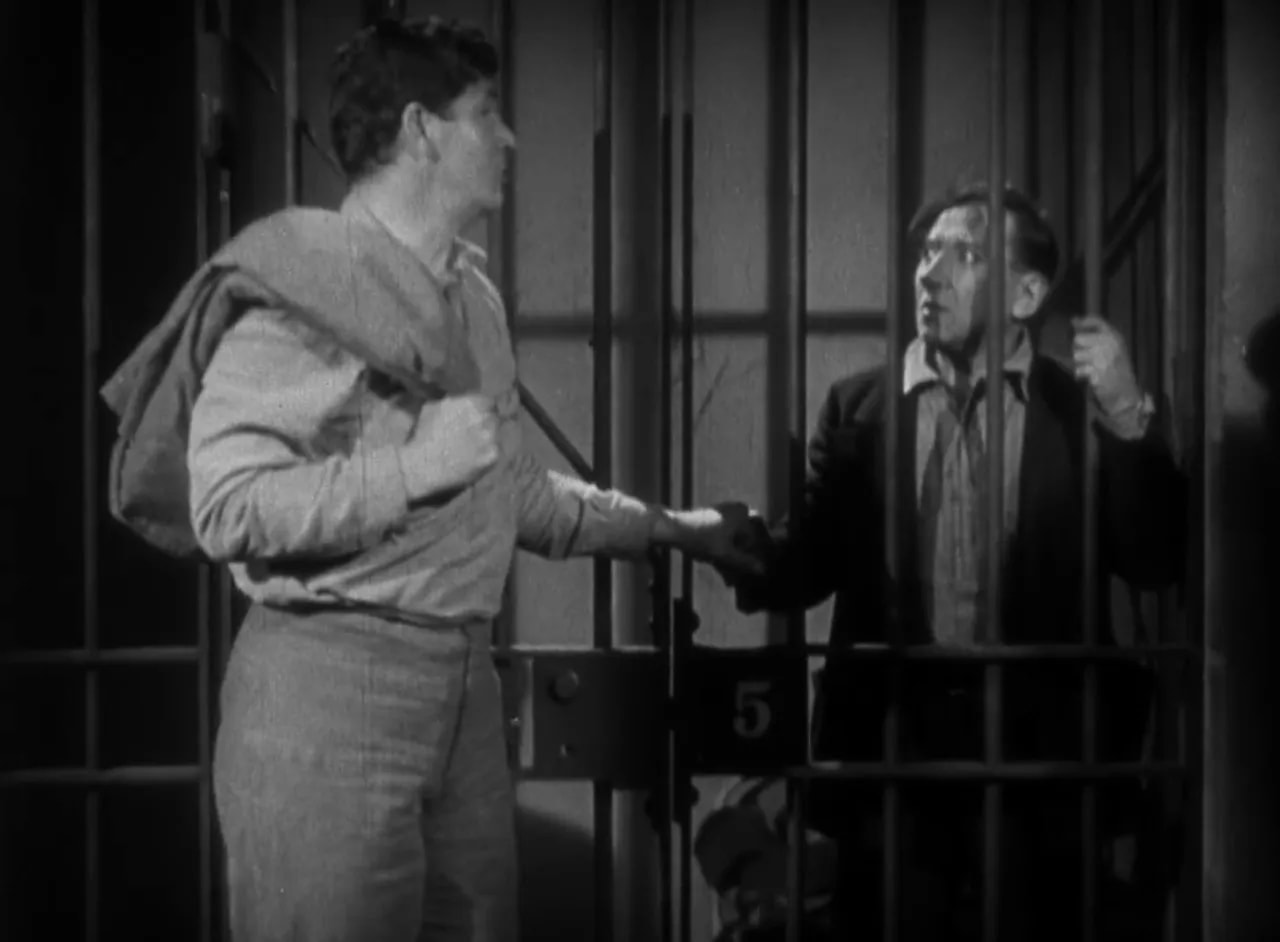
The film's second half, set in the death house at Sing Sing, converts penitentiary routines into a kind of vaudeville. Prisoners swap tall tales and sing, the warden cracks jokes, and Thunderbolt instructs his dog to “play dead.” The setting reframes criminality as theater and makes the imminence of execution grotesquely human. This is one reason Thunderbolt reads as a proto noir film noir movie: the formal interplay between performance and fate, morality and spectacle, anticipates the existential theatricality of later noir protagonists.
The warden and the guards: a surprising comic chorus
Tully Marshall's warden acts less like a bureaucratic figure and more like an MC for the death row show. His breezy lines and officious humor cut against the drama, and Sternberg allows the prison to become a place where absurdity meets mortality. This tonal complexity—comic, theatrical, and fatalistic—is a distinctive ingredient in a film noir movie that refuses easy categorization.
The noble gangster and moral ambiguity
Thunderbolt plays with the archetype of the noble gangster. Comparing it to Sternberg's earlier Underworld, the film offers a protagonist who is sentimental toward animals and friends yet dangerous and vengeful by instinct. That combination of charm and menace is core to the film noir movie sensibility: characters who are neither heroes nor villains but complex figures driven by compulsion, loyalty, and a troubled code.
Thunderbolt's final act—when his hand falls on Bob's shoulder moments before the latter's supposed execution—resists a straightforward moral reading. Is this redemption, reluctant mercy, or performative defeat? The ambiguity is precisely the point. The film noir movie often favors such unresolved gestures, letting them accumulate meaning through image, sound, and performance rather than through didactic explanation.
Screenwriters and source material
The screenplay credits Herman J. Mankiewicz and Joseph L. Mankiewicz (titles), adapted from a story by Jules and Charles Furthman. Those writing credits matter because they show a line from pulpish crime fiction to a more stylized, character-driven drama. The Mankiewicz brothers were early craftsmen of Hollywood narrative who could shape dialogue and title cards as needed for transition from silent to sound, and their handiwork is visible in the film's structural clarity: the nightclub sequence followed by a penal second half that frames fate in a stark, theatrical manner.
Production context and technical innovation
Thunderbolt emerged at a moment when sound was transforming cinema. Directors and technicians were anxious about sound's potential to reduce film to recorded theater. Sternberg responded differently: he saw synchronized sound as another expressive tool. For him, the sound track should add to the image, not replace or obscure it. The film therefore features carefully integrated diegetic music and offscreen effects that expand the cinematic language.
The existence of two versions—one silent, one sound—reflects the transitional market. By crafting a sound version that uses music as an integral part of the mise-en-scène rather than as background, Sternberg demonstrates how the film noir movie could be rethought for a new technological era.
Critical response then and now
Contemporary critics were divided. Some felt the film's melodramatic plot strained to be serious while borrowing the trappings of musical entertainment. Others recognized Sternberg's technical daring. Bancroft's Academy Award nomination signaled the industry's respect for his central performance. Over time scholars and critics have emphasized Sternberg's creative use of sound and the film's stylistic achievements, situating Thunderbolt as an important antecedent to the noir lexicon.
The film noir movie lineage: why Thunderbolt matters
Thunderbolt is often read as a proto noir film noir movie because of its visual motifs, morally ambiguous protagonist, and thematic preoccupations with fatalism and betrayal. It predates what scholars later codified as noir, but its DNA—shadowy frames, antiheroic centers, urban corruption, and fatal romance—is unmistakable.
Furthermore, the film's sound experiments anticipate noir's reliance on voice-over, jazz-inflected diegetic music, and rhythmic editing to convey mood and subjectivity. Sternberg's choice to let sound compete with the image rather than cloak it in unobtrusive score creates an aural texture that noir directors later exploited to signal inner turmoil and urban menace.
Scenes that define the film noir movie sensibility
- The Black Cat nightclub: a long, audacious sequence where music, offscreen commentary, and camera movement collide.
- The police interrogation: Ritzie's encounter with the inspector, where the law's performative side is as much on display as its coercive one.
- The frame-up: Thunderbolt's orchestration of Bob's arrest turns private passion into public crime.
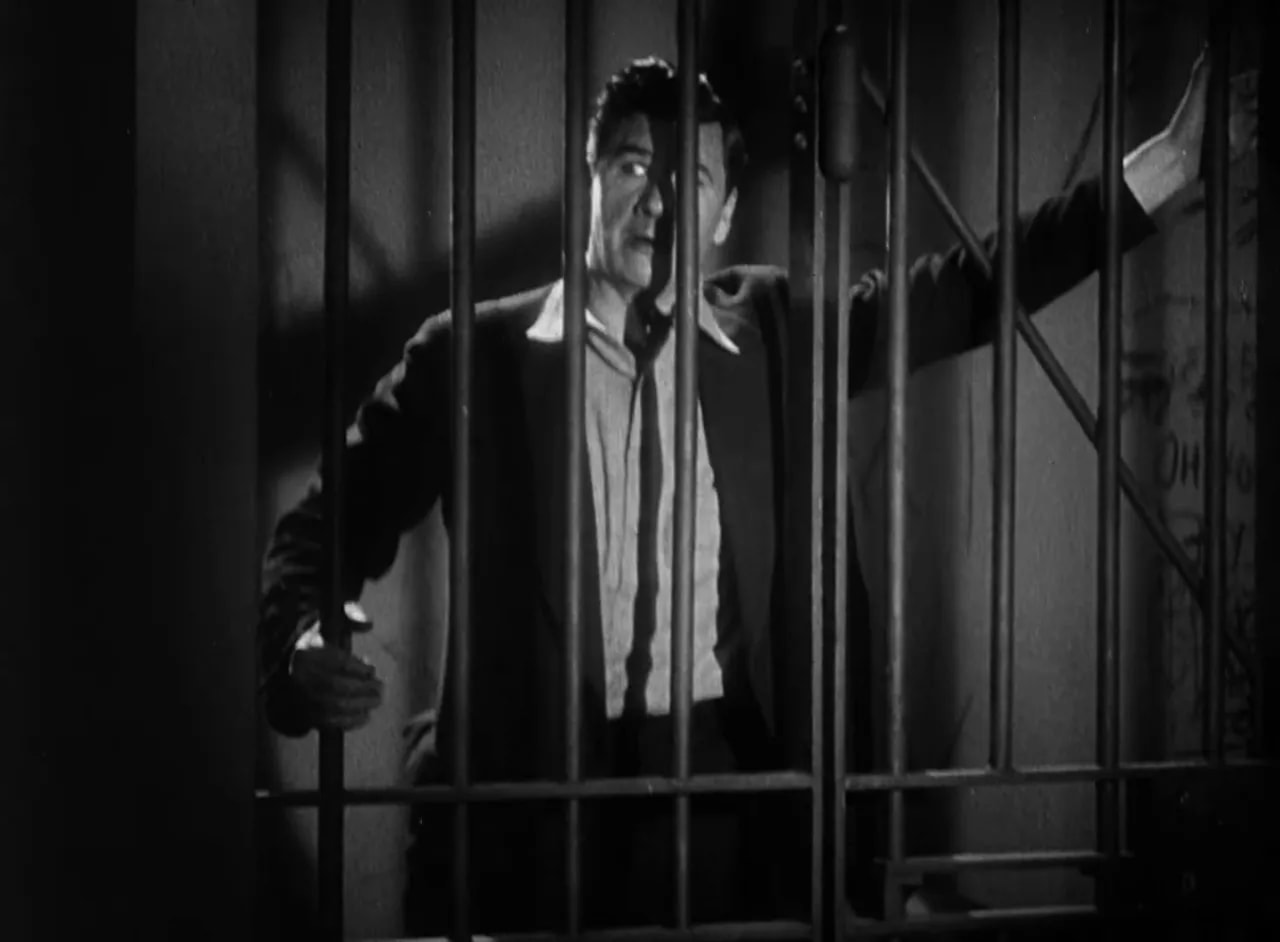
- Death Row: a theatricalized purgatory where prisoners sing, joke, and wait, transforming impending death into communal performance.
Each of these scenes contributes to Thunderbolt's claim as a proto noir film noir movie: they prioritize mood, character compromise, and an urban space that feels both theatrical and terminal.
Visual style and mise-en-scène in a film noir movie context
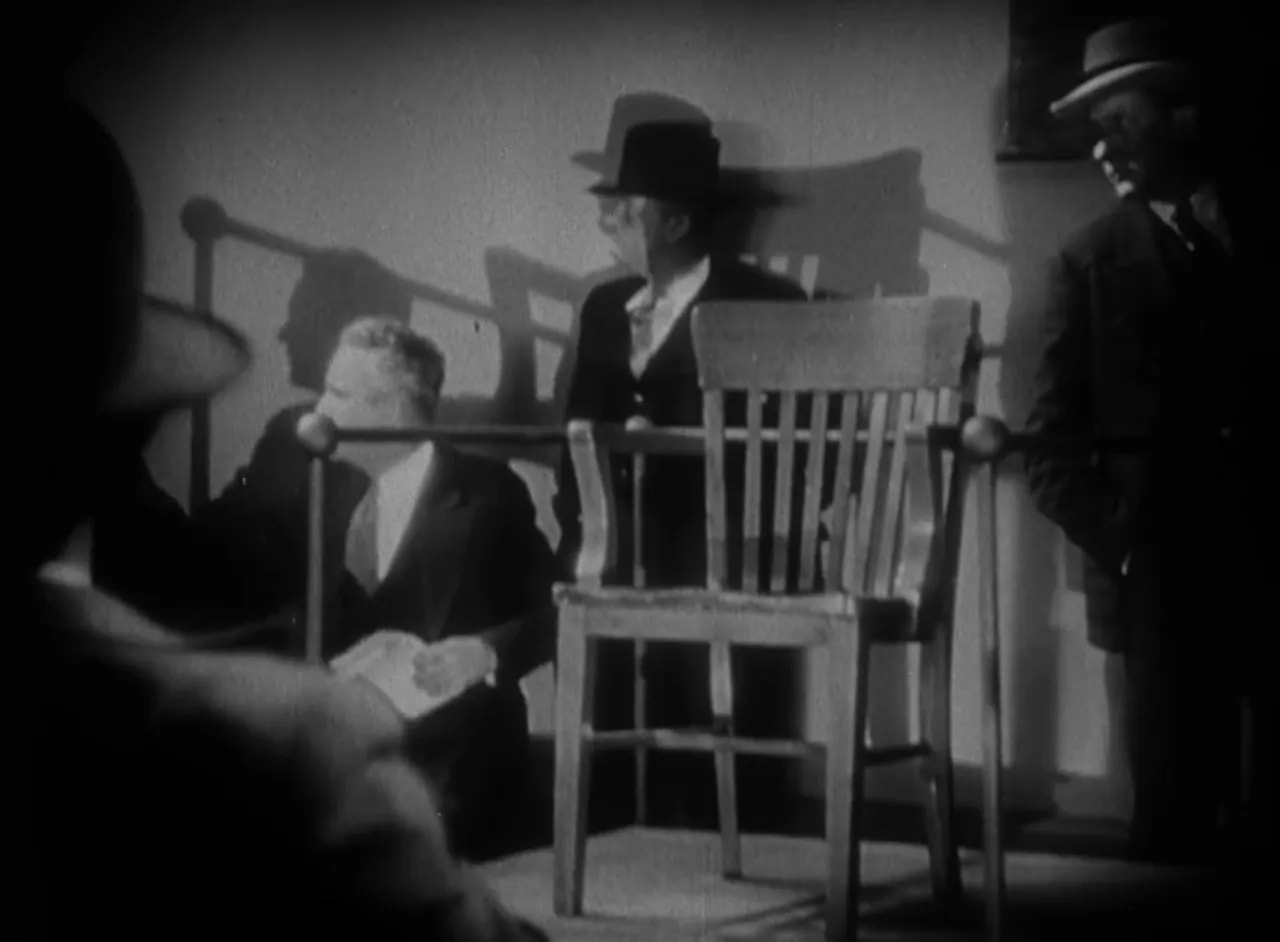
Sternberg brings an expressionist eye to Thunderbolt. Frames tilt, lights fall across faces with theatrical precision, and interiors—especially the nightclub and death house—feel designed to show psychological states. The result is less naturalistic than atmospheric: city life here is stylized and perilous, a milieu perfectly suited to what film historians later understood as noir.
The emotional center: Ritzie's quest for normalcy
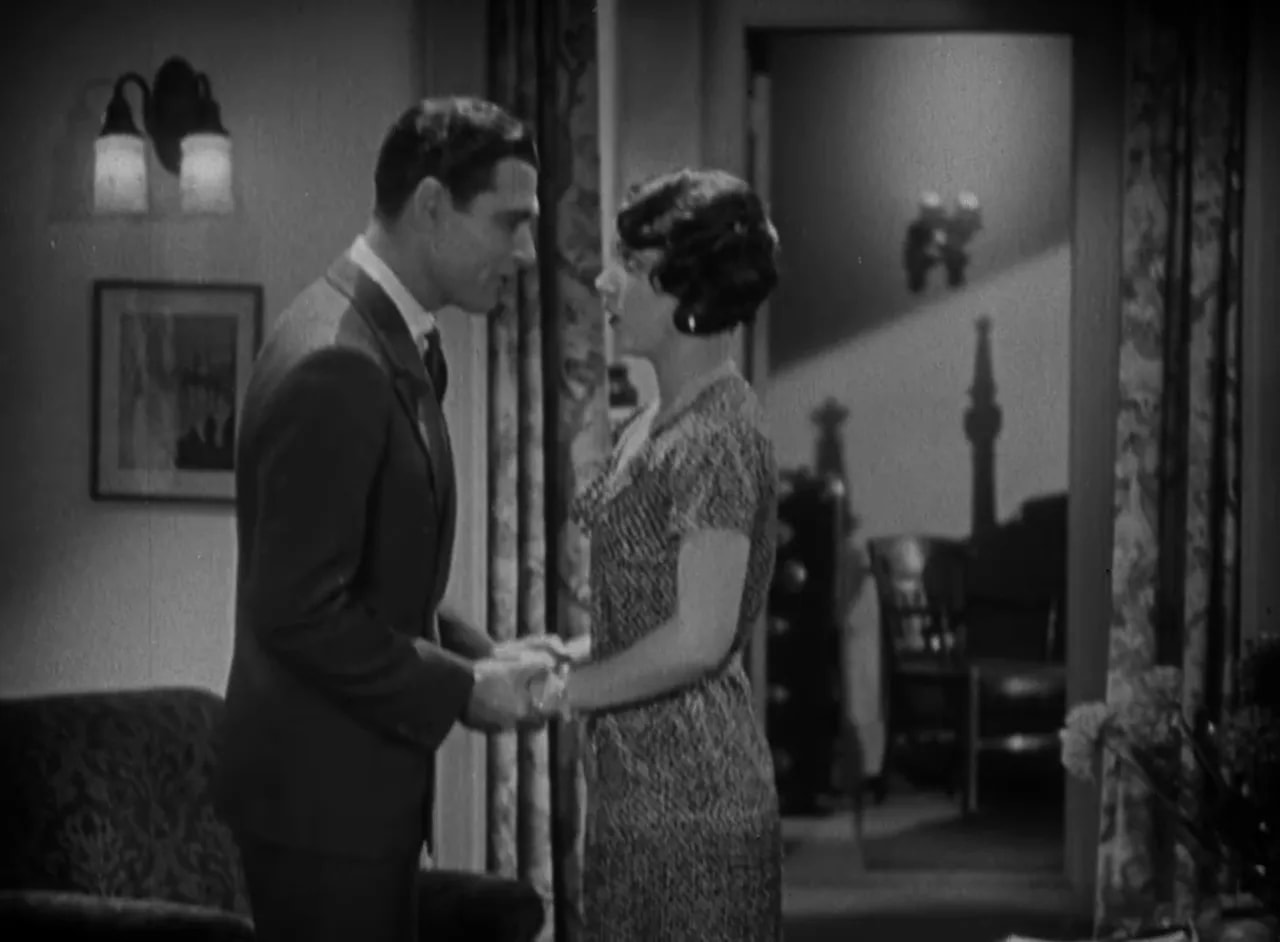
At the heart of the film noir movie is Ritzie, whose desire to “be decent again” complicates the standard gangster plot. Her aspiration for ordinary life—work, marriage, anonymity—creates moral friction. Thunderbolt's love for Ritzie, and his violent jealousy toward Bob, drive the narrative. Yet Ritzie's agency—she engineers the police trap—also shows that the film noir movie can center a woman's attempt to escape criminality, even as the plot moves toward tragedy.
Performance notes: Bancroft and the art of contradiction
Bancroft's portrayal is instructive. He embodies an archetype central to the film noir movie: the man who is dangerous and tender, grandiose and intimate. His physicality is balanced by moments of vulnerability—squeezing a dog’s toy, teaching the animal tricks, or standing before the execution. These gestures complicate audience sympathy and force a reassessment of criminal identity as both social product and personal pathology.
Why the film noir movie label fits—and where it still resists
Thunderbolt fits the film noir movie genealogy because it shares noir's preoccupations—urban decay, moral ambiguity, fatalism, and stylized visual language. Yet it also resists neat categorization because it retains elements of melodrama and vaudeville. Death Row's comic interludes, the warden's breezy humor, and the film's sentimental beats prevent it from being wholly pessimistic. The result is a hybrid: a film noir movie that is also a transitional artifact, negotiating the old cinema's theatricality and the new cinema's sound-driven expressiveness.
Reception and legacy
Early reviews were mixed. Some critics objected to the blending of musical elements with dramatic stakes. Others recognized the film's craft, and later critics returned to its innovations with fresh appreciation. Bancroft's nomination and Sternberg's experimental approach ensured that Thunderbolt would not be forgotten. It remains a reference point for understanding how sound reshaped cinematic storytelling and how gangster melodrama made room for a more ambiguous moral grammar that would bloom into noir.
Practical viewing notes
Anyone approaching Thunderbolt as a film noir movie should look and listen simultaneously. The film rewards attention to offscreen sounds, background music, and the way Sternberg stages group dynamics—crowds, chorus lines, and prison cells—to encode social and psychological pressure. Watching in a good-quality print (or restored digital scan) is preferable because Sternberg's visual textures and tonal contrasts are part of the experience.
Key themes for the classic cinema enthusiast
- Loyalty versus jealousy: Thunderbolt's protective instincts toward Ritzie oscillate with possessiveness.
- Performance and reality: Nightclub spectacle and death row ritual both stage identity.
- Sound as moral agent: The soundtrack comments on images, adding complexity.
- Redemption and ambiguity: The final gesture resists clear moral closure.
Why study this film noir movie today?
Thunderbolt is essential for anyone tracing how noir evolved. It is an early demonstration that cinema could use sound to complicate visuals and that criminal melodrama could be retooled into something more psychologically and aesthetically daring. The film is a reminder that cinematic categories—noir, melodrama, gangster picture—are porous and that innovation often emerges in transitional moments.

Recommended scenes to study
- Black Cat nightclub (entrance and raid): watch how the camera and sound mix orchestrate mood.
- Ritzie's interrogation: study how staging turns law into theater.
- The frame-up of Bob Moran: notice how private jealousy becomes a public act of violence.
- Death Row rituals: follow the interplay of comic relief and impending doom.
- The final cell exchange: a masterclass in ambiguity and human contradiction.
Final appraisal: a proto noir film noir movie that blooms with contradictions
Thunderbolt is not a pristine exemplar of later film noir movies. It is, instead, a hybrid, an experimental artifact that presses sound into service and remaps gangster melodrama into something more ambiguous and textured. Its sonic strategies, theatrical mise-en-scène, and moral indecision make it a crucial work for classic cinema fans interested in the roots of noir. As a film noir movie, it offers a rich seam of pleasures: stylistic daring, emotional complexity, and the strange, stubborn humanity of a man who oscillates between fury and mercy.
For a student of classic cinema, Thunderbolt rewards repeated viewings. Each return peels back another layer of Sternberg's soundscape, another paradox in Bancroft's performance, another instance where criminality is less an ideology than an operatic code. In the end, Thunderbolt stands as a documentary of its own era and as a precursor to the moody, morally ambiguous film noir movie that followed.