
Kansas City Confidential is a compact, lean film that stands as a paradigmatic film noir movie of the early 1950s. It is a film noir movie that balances a stripped down crime plot with a brittle moral core. The film noir movie quality of the production is unmistakable: shadowed compositions, a tight economical script, and characters who move through a moral fog. This article examines the film from multiple angles as a critic and historian of classic cinema, drawing on primary evidence and contemporary records to explore its plot, themes, production, performances, and legacy as a film noir movie.
Outline
- Introduction to Kansas City Confidential as a film noir movie
- Plot and structural analysis
- Main characters and performances
- Direction, cinematography, and the film noir movie aesthetic
- Screenplay mechanics and motifs
- Notable scenes with illustrative screenshots
- Production background and historical context
- Reception, criticism, and legacy
- Why Kansas City Confidential remains essential viewing for film noir movie enthusiasts
Introduction: A Concise Statement on a Film Noir Movie
Kansas City Confidential is an independently produced film released in 1952 that occupies a distinctive place in the canon of the film noir movie. Directed by Phil Karlson and produced by Edward Small, the picture stars John Payne and Coleen Gray and is notable both for its hardboiled narrative and for its economical craftsmanship. This film noir movie compresses a "perfect crime" premise into a brisk running time and layers the action with personal stakes and moral ambiguity. The result is a film noir movie that marks a turning point in the careers of several key contributors and a work whose influence can still be traced in later crime films that pay heed to its plotting and structure.
Plot and Structural Analysis
The narrative of Kansas City Confidential centers on a meticulously staged armored car robbery that uses a flower delivery truck as a blind. The robbery is conceived and overseen by a shadowy figure known only as Mr Big. He assembles three criminals, each chosen for their motive and their need to flee the country. The three men are Peter Harris, Boyd Kane, and Tony Romano. Each is given a torn King playing card to hold onto and a mask to wear so that none can identify Mr Big or each other. The plan is elegant and chilling in its simplicity, and its consequences form the axis of the film noir movie.
Joe Rolfe, an innocent deliveryman, becomes collateral damage in the crime. Arrested and nearly broken by police, he is later cleared and loses his livelihood. Rolfe then embarks on a personal quest to find the real perpetrators and to clear his name. That quest introduces him to Tijuana and a resort known as Borados where the conspirators gather. Rolfe impersonates one of the original robbers and moves through the web of deception, which culminates in a violent and morally conflicted denouement. The film uses this structure to interrogate loyalty, identity, and the corrupting lure of money.
Key Plot Beats
- Mr Big recruits three criminals and instructs them to meet masked at the split.
- An armored car robbery is executed using a duplicate florist truck; each man wears a mask.
- Joe Rolfe is framed, arrested, then released when an alibi and a duplicate vehicle surface.
- Rolfe pursues suspects to Mexico, infiltrates the gang by impersonation, and seeks the split.
- Mr Big reveals his own identity and an ambivalent scheme involving reward money and personal vindication.
- The final confrontation claims lives and leaves moral consequences rather than simple justice.
Characters and Performances
The film noir movie relies on compact, archetypal figures, and Kansas City Confidential supplies them with clarity and efficiency. The protagonist, Joe Rolfe, is portrayed by John Payne as a wronged, resolute man. Payne gives the role a mixture of weary determination and practical cunning. His performance anchors the film noir movie by lending credibility to a desperate moral imperative.
Coleen Gray plays Helen Foster, the daughter of the man who is later unmasked as Mr Big. Gray's Helen is a law student and moral compass who reopens old wounds and complicates motives. Her relationship with Rolfe is understated yet crucial. Helen embodies a film noir movie's recurring counterpoint of innocence and resolve in a corrupt world.
Preston Foster, portraying Tim Foster, is at the film's center as the man who has both public respect and private designs. As Mr Big he orchestrates the robbery plan and later stages the recovery to claim a reward. The performance is layered: a one-time police figure who is driven by personal hope and professional resentment. His arc is the film noir movie’s most ambivalent and tragic.
Neville Brand as Boyd Kane, Lee Van Cleef as Tony Romano, and Jack Elam as Pete Harris contribute memorable supporting turns. Each fills an archetypal role in the film noir movie: the cop killer, the femme-chasing getaway driver, and the gambler with a violent streak. The cast trades in short, sharp character beats that align with the film noir movie’s economy of storytelling.
Casting Choices and their Impact
Casting for a film noir movie must do heavy lifting because the genre often depends on unsentimental shorthand. John Payne was a performer transitioning from musical and mainstream roles into grittier material, and his presence in a film noir movie like Kansas City Confidential signals an actor repositioning toward tougher dramatic work. Preston Foster’s past as a leading man and his portrayal of a once-respected police figure add texture to the film noir movie’s themes of reputation and fallibility. The ensemble delivers the terse, functional performances appropriate to a film noir movie while still allowing for moments of genuine emotional note.
Direction and Cinematography: The Film Noir Movie Look
Phil Karlson’s direction and George E. Diskant’s cinematography combine to produce the film noir movie’s distinctive, unforgiving mood. The film uses tight framing, stark lighting, and judicious location shooting to create an atmosphere of claustrophobia and menace. One of the film's strengths as a film noir movie is its visual clarity: scenes are composed to emphasize moral and literal entrapment.
The camera work is functional but incisive. Karlson does not indulge in grandstanding but instead constructs sequences that increase tension by withholding information and shifting perspective. The film noir movie benefits from this restraint because it keeps the viewer aligned with Rolfe’s point of view, perpetually uncertain and alert.
Lighting and Composition
Lighting in this film noir movie often strips scenes to essentials: faces emerge from shadow and objects of significance are highlighted with a practical, almost documentary insistence. The use of masks and the visual motif of a torn King card add to the film noir movie’s world of symbolic fragments. In interior scenes, the film noir movie sets are arranged so that characters are sometimes partially occluded, a visual corollary to the film noir movie theme of incomplete knowledge.
Screenplay, Themes, and Motifs
The screenplay by George Bruce and Harry Essex builds a compact series of set pieces connected by motive rather than by melodrama. The film noir movie relies on a crime caper skeleton: a meticulous heist, betrayed accomplices, identities worn as masks, and a moral reckoning. Themes of honor, betrayal, and the illusion of control pervade the film noir movie.
The Central Motif: Masks and Cards
Masks function literally and symbolically within the film noir movie. Mr Big’s mask anonymizes authority and intention. The torn King playing card serves as a totem for membership and as a potential identifier. The film noir movie insists that identity is both constructed and fragile: characters try to make themselves legible by gesture or object, yet the objects are torn, the masks remove human detail, and the meanings refuse to hold. These motifs are concise but essential to an understanding of what makes this a film noir movie.
Personal Justice versus Institutional Justice
Kansas City Confidential places personal moral agency at the center of its film noir movie framework. Joe Rolfe seeks restitution and identity, which places him against institutional powers and against criminal conspirators alike. The film noir movie thus stages an argument about whether private redress can substitute for public process. The tragic unfolding with Tim Foster as Mr Big complicates that argument by showing a man who embodies both the power of institution and the corruptibility of private motive. The film noir movie ends not with clean resolution but with the bitter, nuanced consequences typical of the genre.
Illustrative Scenes and Screenshots
The film noir movie unfolds through several key scenes that crystallize its style and themes. The following selections include contextual commentary and visual anchors.

The early telephone scene establishes the precariousness of identity in the film noir movie. A voice, an instruction to meet in a hotel room, and the implication of escape signal that Rolfe’s world has intersected with a criminal design. The line captured in the transcript is crisp: "I'm trying to tell you, you got a wrong number." That sentence conveys the first friction that will escalate into ruin.
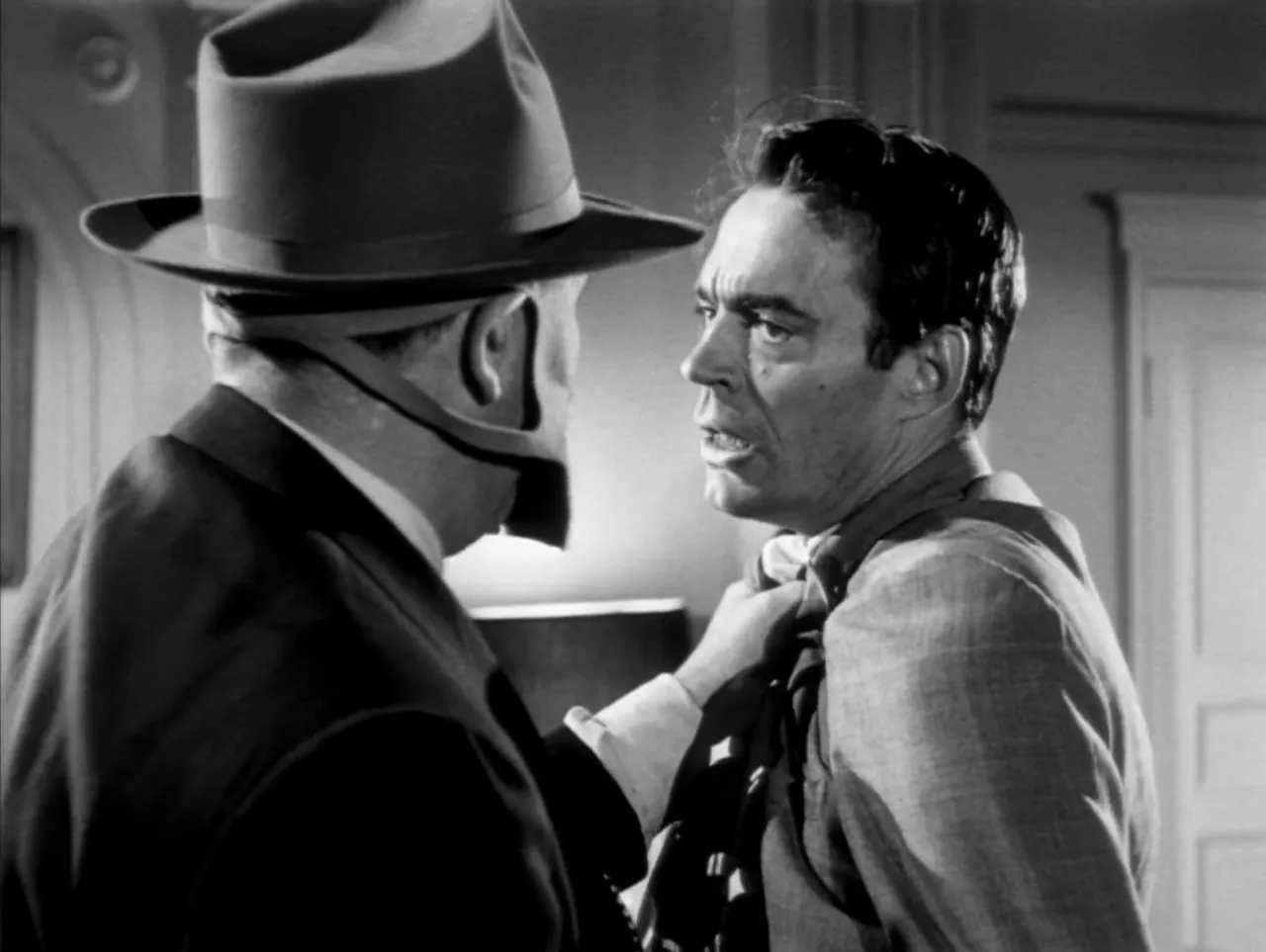
When Mr Big forces a recruit to remove his mask, the film noir movie stage is set. The mask serves as a literal device to prevent recognition and as a symbolic barrier to trust. The line "Take off the mask" becomes a demand for vulnerability that the film noir movie consistently refuses to grant.
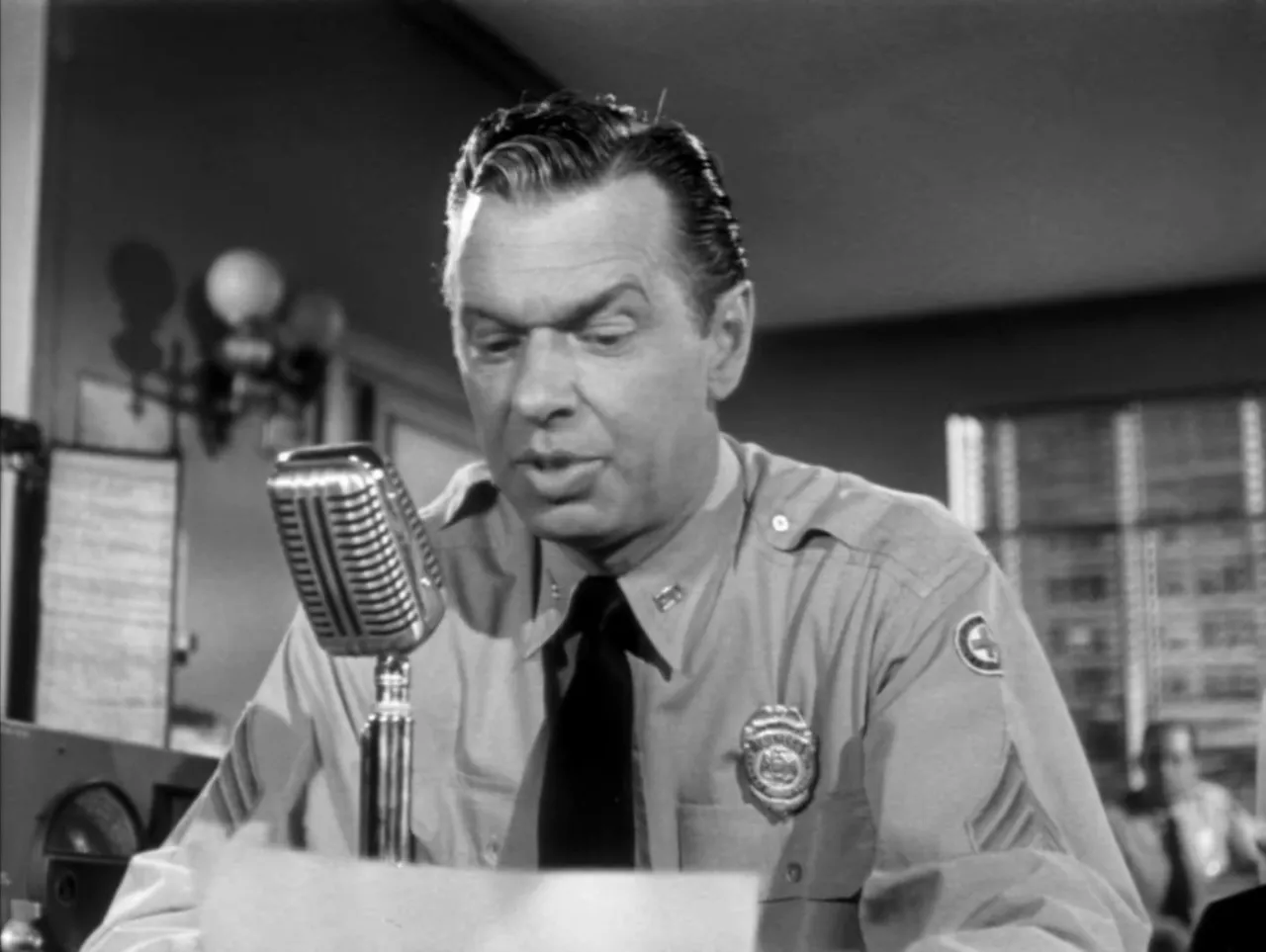
The police bulletin labeling the crime as a 117 alert is crucial to the film noir movie’s procedural backbone. Public institutions mobilize and correspond in ways that press down on private actors. Yet this film noir movie shows that institutional response can be overturned by deceit and misdirection.

The florist truck is a brilliant piece of misdirection in the film noir movie. The transcript explains the robbery's execution and how the gang slips into the duplicate vehicle, leaving the innocent deliveryman as a frame. Visual economy makes it one of the film noir movie’s memorable inventions: everyday objects become instruments of criminal design.
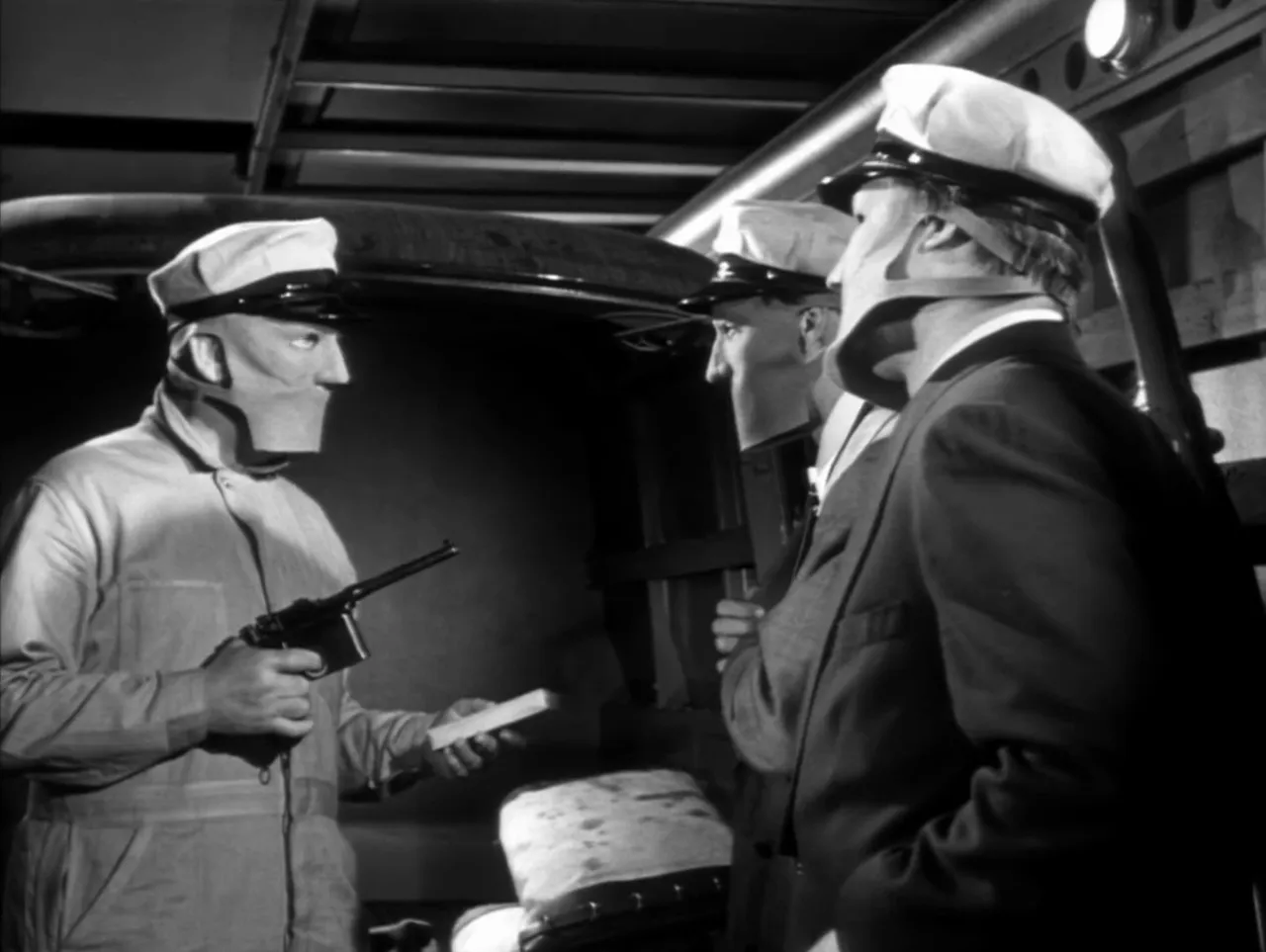
The torn King cards consolidate the film noir movie's motif of fragmented identity. They are both proof of membership and wedge of potential betrayal. The directive to keep masks on and the cards close converts ordinary trinkets into the plot’s currency.
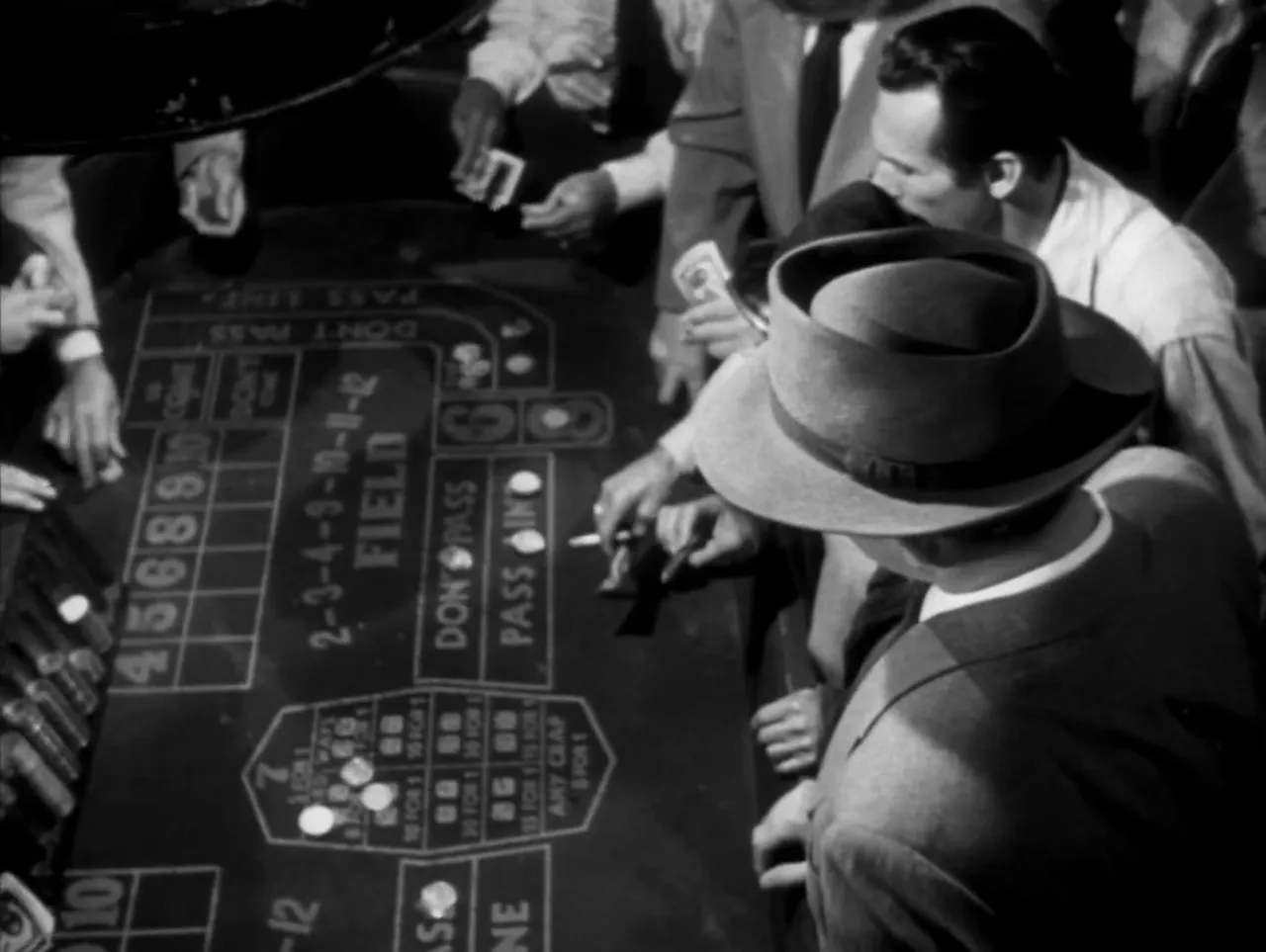
One of the film noir movie’s recurring images is of gambling as both a pastime and a way of life. The craps table scene in Tijuana is raw and noisy, a microcosm of risk that reflects the larger stakes of the plot. The transcript captures the lively dealer calls and the cadence of tension in the game. In a film noir movie, the table is a stage where chance meets character.
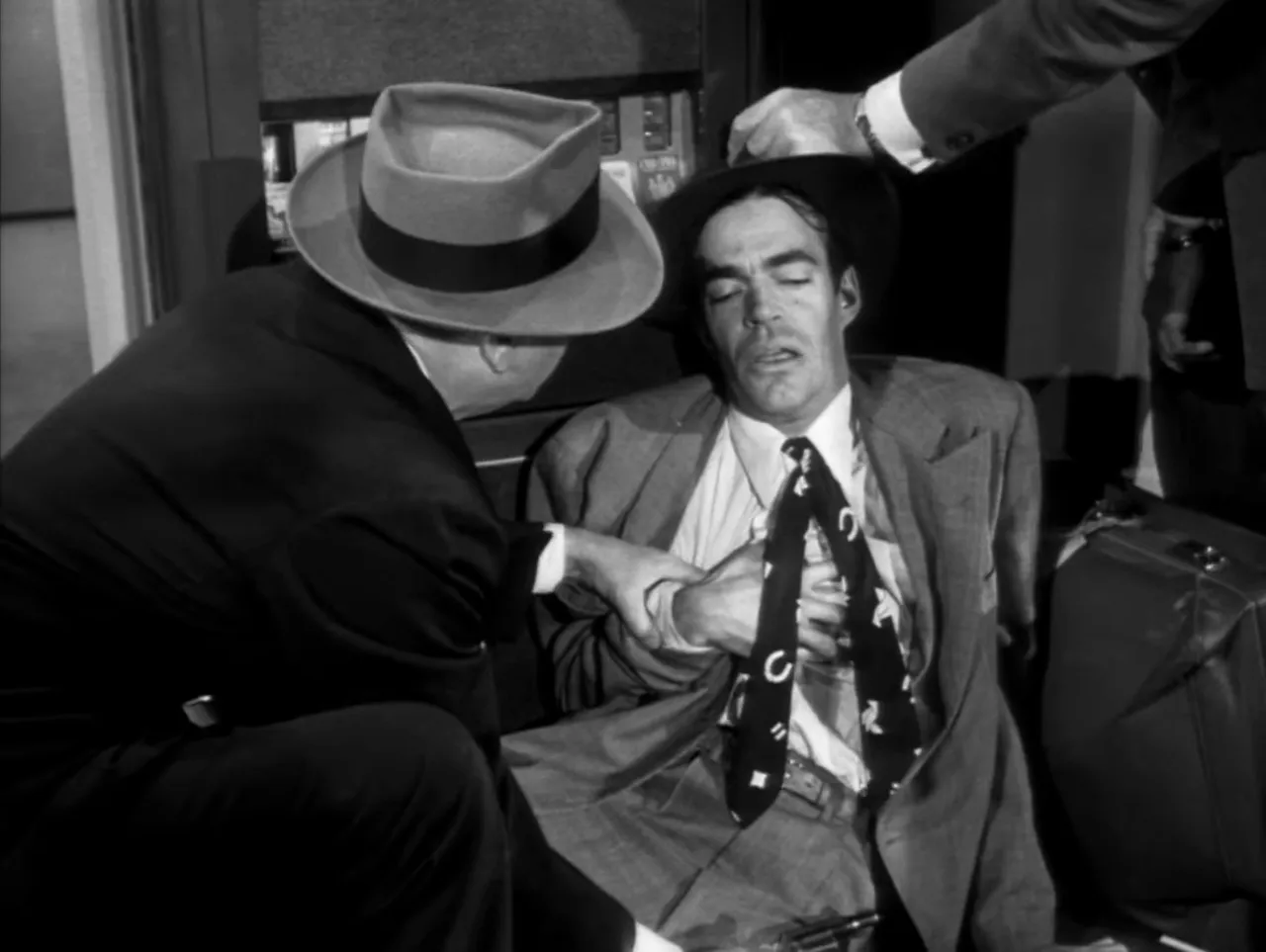
The airport arrest of Pete Harris is a fulcrum moment in the film noir movie. Recognition, violence, and mistaken identity collide. The transcript shows police urgency: "Cops!" and the heightened interrogation about "dough" and "who's down here with you?" The scene compresses the film noir movie's interest in exposure and the fallout of being known.
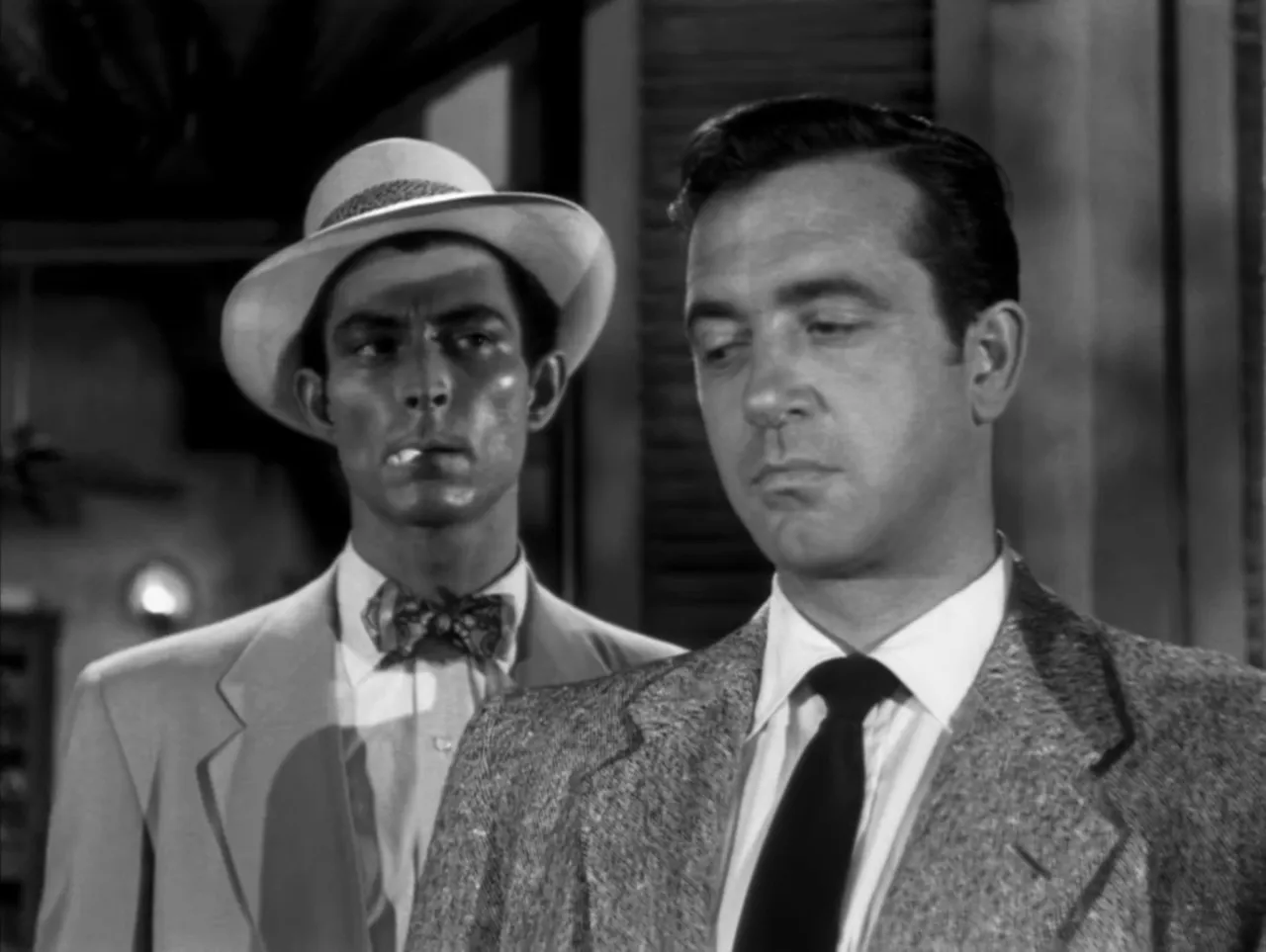
At the poker table, the torn card becomes a weapon of truth. The moment when Rolfe flashes the card is a classic film noir movie beat: private games and dark motives converge, and the insinuation that identity can be tested by object and gesture is made concrete.
Production Background and Historical Context
Kansas City Confidential was produced by Edward Small and was the only film made by his Associated Players and Producers, a short-lived company formed with partners Sol Lesser and Sam Briskin. The film was shot partly on Santa Catalina Island, California, which doubled for the Mexican resort locale Borados. Filming commenced on June 4, 1952, and the movie was released in November of the same year. These production conditions reflect the film noir movie economy of the postwar independent production era when tight schedules and resourceful location work were common.
The film was originally titled Kansas City 117 with the number referencing a police code. Small later acquired the title Kansas City Confidential, which strengthened the film noir movie’s aura of urban secrecy. The story is credited to Rowland Brown and Harold Greene, with screenplay work by George Bruce and Harry Essex. Composer Paul Sawtell supplied the score, and George E. Diskant handled cinematography, contributing the stark image that marks the film as a film noir movie.
Public Domain Status
The film is now in the public domain, which has influenced its circulation and reception as a film noir movie. Public domain status means the film has been widely available in various formats and has been accessible to scholars, fans, and filmmakers who study or repurpose older works. The film noir movie’s public visibility has helped it become a touchstone for later directors who reference its plotting and tone.
Reception, Criticism, and Legacy
Contemporaneous criticism of the film was mixed. Variety praised director Phil Karlson for maintaining a grim atmosphere through the film's momentum and commended John Payne's performance for its unrelenting quality. Time magazine recognized the film's "perfect crime" plot but had reservations about the moviemaking craft. Bosley Crowther of The New York Times was less favorable, criticizing the screenplay as an "illogical fable" and the direction as routine. Such divergent views are typical for a film noir movie that trades in economical ambition and moral complexity rather than spectacle and conventional sentiment.
The film's legacy as a film noir movie is notable. It is often cited as an influence on Quentin Tarantino’s Reservoir Dogs, particularly in its use of a heist plotted with meticulous anonymity and the theme of mistrust among conspirators. Kansas City Confidential also ushered in a series of "confidential" titled films made by Edward Small including New York Confidential and Chicago Confidential, indicating that the film noir movie struck a chord with producers and audiences alike.
Why Critics and Historians Value This Film Noir Movie
Critics value Kansas City Confidential as a film noir movie for several reasons. First, its plot is tight and focused; it achieves clarity without sacrificing complexity. Second, the moral ambiguity embedded in Mr Big’s plan and Tim Foster’s ambition provides material for interpretive debate. Finally, the film noir movie’s technical execution, especially the camerawork and editing, provides a model of economical filmmaking where every scene is discursive and purposeful.
Comparative Notes: Influence on Later Film Noir Movie Works
Kansas City Confidential exemplifies a strain of film noir movie that foregrounds circulation of money and the consequences of staged deception. The notion of a heist executed with masks and an anonymous mastermind echoes in later films that refine the theme. Reservoir Dogs, for example, takes explicit cues from the masked heist and the subsequent unraveling through suspicion and violence. In both a classic film noir movie and its later homages, the heist functions as a device to expose the true nature of character rather than as a mere set piece.
Scene-by-Scene Critical Notes: How the Film Noir Movie Makes Its Case
The film noir movie constructs argument through scenes that accumulate rather than through expository monologue. The phone call that initiates the plot is small but decisive. The robbery sequence is orchestrated with functional clarity. The sequence that finds Rolfe framed and then released shows how institutional processes can fail and then be subverted through luck or design. The Tijuana and Borados sequences amplify the sense of a lawless, liminal zone where identity can be performed and where masks and torn cards become primary currencies.
Two sequences are particularly worth dissecting for anyone studying the film as a film noir movie. The first is the reveal of the cards and the explanation that "the cards will identify you," which is an ingenious mechanism to formalize membership while maintaining anonymity. This scene turns an ordinary object into narrative leverage. The second is the final confrontation when Mr Big’s duality is exposed. This catharsis is not one of triumph but of tragic disclosure: the man who sought to use the reward and to regain a public position destroys several lives in the process. The film noir movie thus ends with a moral punctuation that is bleak but narratively consistent.
Technical Craft: Editing, Music, and Pacing in a Film Noir Movie
Buddy Small’s editing contributes to the film noir movie’s brisk pacing. Scenes are lean, with little lack. Paul Sawtell’s score underscores rather than overwhelms. The rhythm of the film noir movie is one of compressed urgency: the story is delivered in short, potent blows rather than expansive meditations. This compression enhances tension and supports the genre’s preference for moral ambiguity over tidy closure.
Economy as Aesthetic
The film noir movie aesthetic here is not merely about lighting and mood but about an economy of means. The production values, directed focus, and the screenplay’s structural discipline cohere into a film noir movie that is efficient and effective. Because the film must convey motive, misrecognition, and consequences within a single hour and a half, every line and camera setup exists to carry narrative payload. That is a hallmark of the film noir movie approach to cinematic storytelling.
Interpretation: Moral Ambiguity and the Film Noir Movie Ethos
One of the film noir movie’s enduring qualities is its investment in moral ambiguity. Kansas City Confidential offers no simple binaries. Tim Foster is both a wronged man seeking redress and a manipulator who will sacrifice others for personal restoration. Joe Rolfe is an innocent man but one who embraces deception to achieve his ends. The gang members are criminals but also pathetically human in their divisions. The film noir movie investigates the fractured ethics of postwar life: the desire for restoration, the allure of illicit gain, and the fragility of trust.
The film noir movie does not celebrate heroism in any conventional sense. Instead it centers on consequences and on the way private aims collide with public enforcement and private loyalty. The conclusion is a moral reckoning more than an adjudication. That texture is precisely what marks Kansas City Confidential as a film noir movie of merit and importance.
Preservation, Availability, and the Film Noir Movie Audience
Because the film is in the public domain, it circulates widely and is easily accessible for film noir movie enthusiasts, scholars, and students. Public domain availability invites broader study but also variable presentation quality. For those seeking to view the film as a film noir movie text, attention to a good restoration or a high-quality print is vital because the cinematography and editing are essential to the film’s meaning. For the film noir movie researcher, the film’s accessibility makes it a useful case study for heist mechanics, moral ambiguity, and independent production practices in the early 1950s.
Concluding Assessment: Kansas City Confidential as a Film Noir Movie Classic
Kansas City Confidential functions as a distilled version of film noir movie values. It offers a tightly structured plot, an economy of character, and a visual style that privileges shadow and exposure. As a film noir movie, it is significant not only for its immediate story but also for its influence on later films that adapted its themes and techniques. The film noir movie’s interest in identity, betrayal, and the fatal illusions of control is reflected in every sequence, from the phone call that initiates deception to the tragic final exchange where the consequences of duplicity are realized.
For the classic cinema enthusiast, scholar, or newcomer wondering why the film noir movie persists in cultural and academic interest, Kansas City Confidential provides an instructive, compact example: it shows how economic constraints can sharpen storytelling, how motifs like masks and torn cards can encode moral ambiguity, and how a film noir movie can be at once a crime story and an ethical meditation. It remains an instructive and rewarding film noir movie to watch, study, and recommend.
Appendix: Cast and Principal Credits for this Film Noir Movie
- John Payne as Joe Rolfe
- Coleen Gray as Helen Foster
- Preston Foster as Tim Foster
- Neville Brand as Boyd Kane
- Lee Van Cleef as Tony Romano
- Jack Elam as Pete Harris
- Dona Drake as Teresa
- Mario Siletti as Tomaso
- Howard Negley as Scott Andrews
- Carleton Young as Martin
- Don Orlando as Diaz
- Ted Ryan as Morelli
Final Recommendation for Film Noir Movie Viewers and Students
Kansas City Confidential is recommended for anyone invested in the film noir movie as both historical artifact and living influence. It should be screened with attention to its formal apparatus: the tight editing, the economy of dialogue, the symbolic objects, and the small but decisive camera movements. When viewed as a film noir movie, it reveals itself as a model of compact, morally complicated storytelling. For film noir movie study groups, the film offers multiple entry points: comparison with later heist films, analysis of the moral dilemmas, and evaluation of how independent production shaped a genre style.
In sum, Kansas City Confidential represents a clear, forceful expression of film noir movie sensibility. It is deceptively simple in form and surprisingly rich in implication. Students of the genre and fans of classic crime cinema will find in it an essential specimen of the film noir movie tradition.