
Little Caesar is one of those early crime pictures that still feels alive. It hits fast, talks tough, and never wastes time pretending its central figure is anything other than dangerous. For anyone exploring the roots of the gangster picture or the early DNA of the film noir movie, this 1931 classic remains essential. It may predate the full flowering of noir in the 1940s, but its world of ambition, betrayal, fear, and moral collapse points straight toward that darker cinema to come.
Directed by Mervyn LeRoy and built around Edward G. Robinson’s explosive breakthrough performance, Little Caesar tells the rise-and-fall story of Caesar Enrico Bandello, better known as Rico. He starts as a small-town hood with oversized hunger and ends as something far more pathetic than powerful. That journey is the point. The movie does not merely celebrate criminal swagger. It studies the emptiness underneath it.
This is why the film matters. It helped define the screen gangster at the very moment Hollywood was discovering how potent that figure could be. It also gave later crime cinema, including the classic film noir movie, a blueprint for the self-destructive antihero who climbs by force and falls by the same impulse.
A Crime Classic Made at Exactly the Right Moment
Little Caesar was released on January 9, 1931, by Warner Bros. Pictures, produced through First National, and adapted from W. R. Burnett’s successful 1929 novel. The screenplay is credited to Francis Edward Faragoh and Robert N. Lee, with Robert Lord and Darryl F. Zanuck uncredited. Hal B. Wallis and Zanuck produced. Tony Gaudio handled cinematography, Ray Curtiss edited, and Ernö Rapée provided the music.
The cast is a major part of the film’s staying power:
- Edward G. Robinson as Rico, the hoodlum whose appetite outruns his judgment
- Douglas Fairbanks Jr. as Joe Massara, Rico’s old partner who longs for a cleaner life
- Glenda Farrell as Olga Stassoff, the dancer who gives Joe a genuine reason to escape crime
- Stanley Fields as Sam Vettori, the gang boss Rico eventually pushes aside
- Thomas E. Jackson as Sergeant Flaherty, the cop who keeps pressure on Rico
- Sidney Blackmer as Big Boy, the remote underworld power broker
The film cost $281,000 and earned $752,000 at the box office, making it a major success. That commercial impact mattered. It encouraged more gangster films and helped Warner Bros. turn urban crime stories into one of the defining modes of early sound cinema.
Anyone browsing classic crime essentials at https://filmnoir.top/all-movies can see how deeply these early gangster pictures influenced the later tradition. Little Caesar belongs near the top of that lineage.
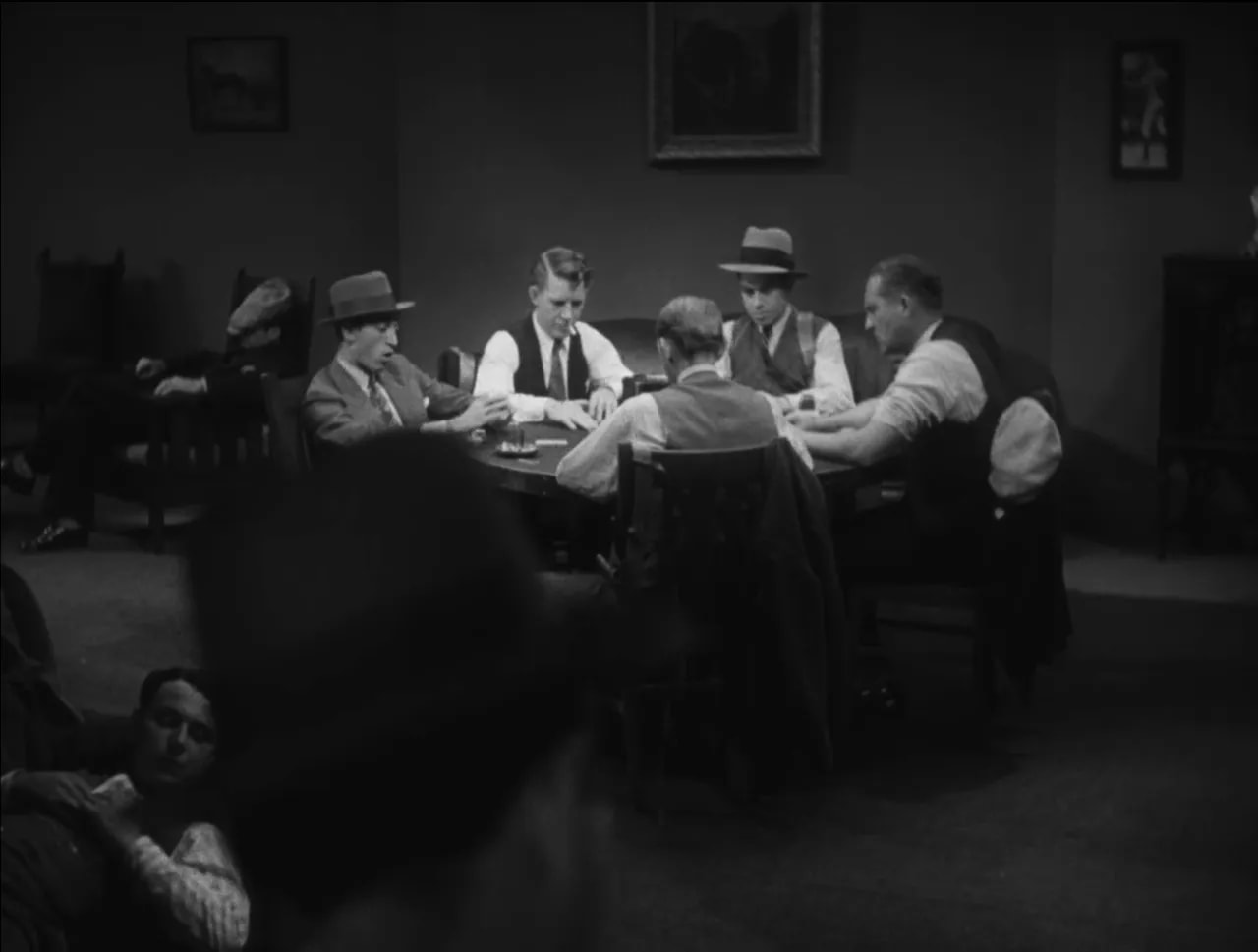
Rico Begins With a Dream, and It Is a Rotten Dream
The movie opens on a deceptively simple conversation between two small-time crooks, Rico and Joe. They are nobodies in a nowhere town, eating cheap food and talking about men who have made it big in the underworld. That talk tells the whole story before the plot really begins.
Joe dreams about city lights, good clothes, women, excitement, and eventually leaving crime behind to return to dancing. Rico wants something else. Money matters to him, but power matters more. He wants to walk into a room and have men obey. He wants to become somebody. That desire is not noble ambition. It is domination stripped to its rawest form.
That distinction is one reason Little Caesar feels so modern. The film understands that crime is not only about profit. For Rico, it is theater, rank, status, and command. He does not want security. He wants recognition.
This hunger makes him a crucial forerunner of the later film noir movie protagonist. Noir often turns on people who mistake desire for destiny. Rico believes sheer will can conquer every obstacle. He cannot imagine limits until those limits close around his throat.
Chicago, the Gang, and the First Step Up
Rico and Joe head east to Chicago, where things happen on a bigger scale. There, Rico talks his way into Sam Vettori’s gang. The scene is pure self-advertisement. He promises loyalty, toughness, fearlessness, and skill with a gun. He practically vibrates with the need to prove himself.
Sam lets him in, but with conditions. Sam is the boss. Sam gives the orders. Sam decides the split. Rico says yes, but the audience can already feel the truth. He is not built to serve for long.
The gang members are introduced with the rough, colorful flavor that early Warner crime films did so well. They are a crew of drivers, shooters, hangers-on, and comic roughnecks. The names are vivid and street-level. The world is half menace, half swagger. Even here, though, the movie is laying the groundwork for Rico’s eventual takeover. He enters the room as a newcomer, but he looks at the structure around him as something temporary.
Joe, meanwhile, starts drifting away. He finds a real opening in show business when he is hired as a dancer. Olga becomes his partner, and soon more than his partner. This subplot is not just romantic decoration. It is the moral counterpoint of the film. Joe is weak in some ways and indecisive in others, but he is also the one major character who can still imagine a life outside the gang.
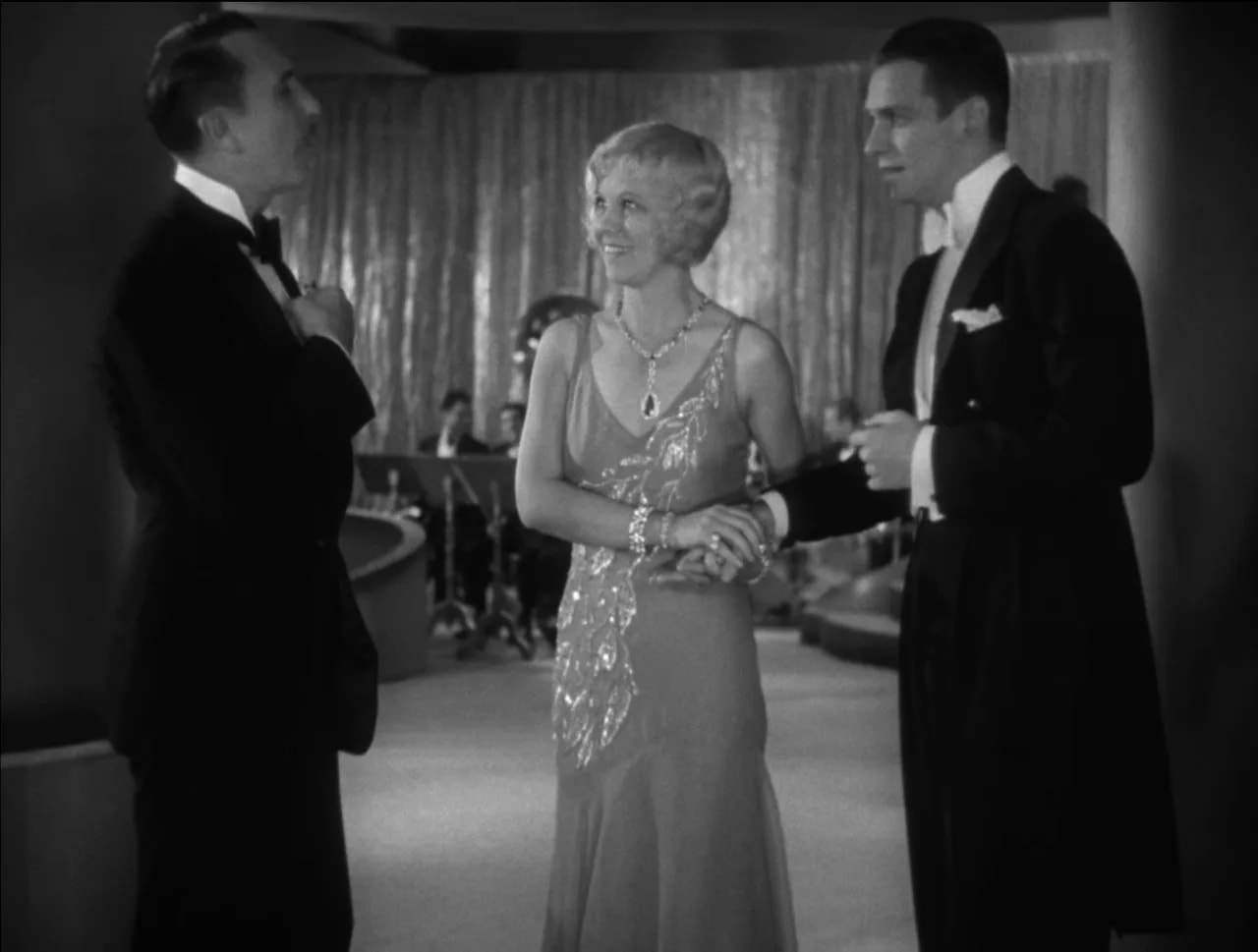
Joe and Olga: The Escape Route Rico Cannot Understand
Joe’s scenes with Olga soften the film without weakening it. In fact, they sharpen Rico by contrast. Joe is drawn to a future built on work, affection, and ordinary happiness. Olga knows his criminal ties are dangerous, and she clearly hopes he can leave them behind. She is not naive about what gang life does to people. That is precisely why she fears it.
There is a revealing moment when Olga sees Joe with a gun. Suddenly the romance collides with the truth of who he has been. Joe tries to minimize it, but she understands enough to know that once a man is embedded in gang life, walking away is not easy. Joe wants to believe this time could be different. The film is less optimistic.
That tension gives Little Caesar emotional stakes beyond the power struggle. If the movie were only about one gangster replacing another, it would still be important. But Joe and Olga introduce the idea that there is another path, however fragile. In a later film noir movie, that path might be equally doomed. Here, it remains possible, though only at tremendous cost.
The Big Rule of the Underworld, and Rico Breaks It
The criminal hierarchy in Little Caesar is carefully arranged. Above Sam sits Pete Montana, and above him looms the distant authority known as Big Boy. Orders come down from the top: cool it for a while, keep the gunplay under control, avoid unnecessary heat. In other words, be professional.
Rico is not professional in that sense. He is too impulsive. Too eager. Too ready to answer any threat with bullets. Burnett, speaking about the character in relation to the novel, described him as doomed by over-impulsive action, and the film keeps proving that point.
When the gang plans the robbery at the nightclub where Joe works, the operation is supposed to be clean. Joe is dragged into helping because his familiarity with the place makes him useful. He resists, not only because he fears being recognized, but because he knows he is on the edge of losing the life he wants with Olga.
Then everything tips. During the robbery, crime commissioner Alvin McClure is shot. In practical terms, this is a disaster. In dramatic terms, it is the moment Rico’s ambition becomes irreversible. He has not just joined the game. He has put a target on himself and everyone around him.
Even before this, several characters warn against sloppy violence. Afterwards, the reaction is panic. They all understand the significance. A routine criminal job is one thing. Killing a crusading public official is another entirely.
Rico’s Fatal Trait: Force First, Consequences Later
What makes Rico fascinating is that he is not blind to danger. He understands the street. He can read fear. He can size up weakness. But he cannot master himself. He treats every obstacle as a challenge to his pride, and that pride keeps shoving him into worse trouble.
The McClure killing does more than bring police pressure. It reveals Rico’s psychology in full. He would rather create a bigger problem than retreat an inch. The pattern becomes the movie’s governing logic:
- He takes offense quickly
- He escalates instead of adapting
- He confuses boldness with strength
- He mistakes fear in others for respect
- He believes domination is the same thing as control
That pattern is central to nearly every great gangster picture and more than one landmark film noir movie. Characters in these worlds usually fall because they cannot stop pushing. Rico does not simply rise through organized crime. He burns through it.
Tony’s Breakdown and the Human Cost of Gang Power
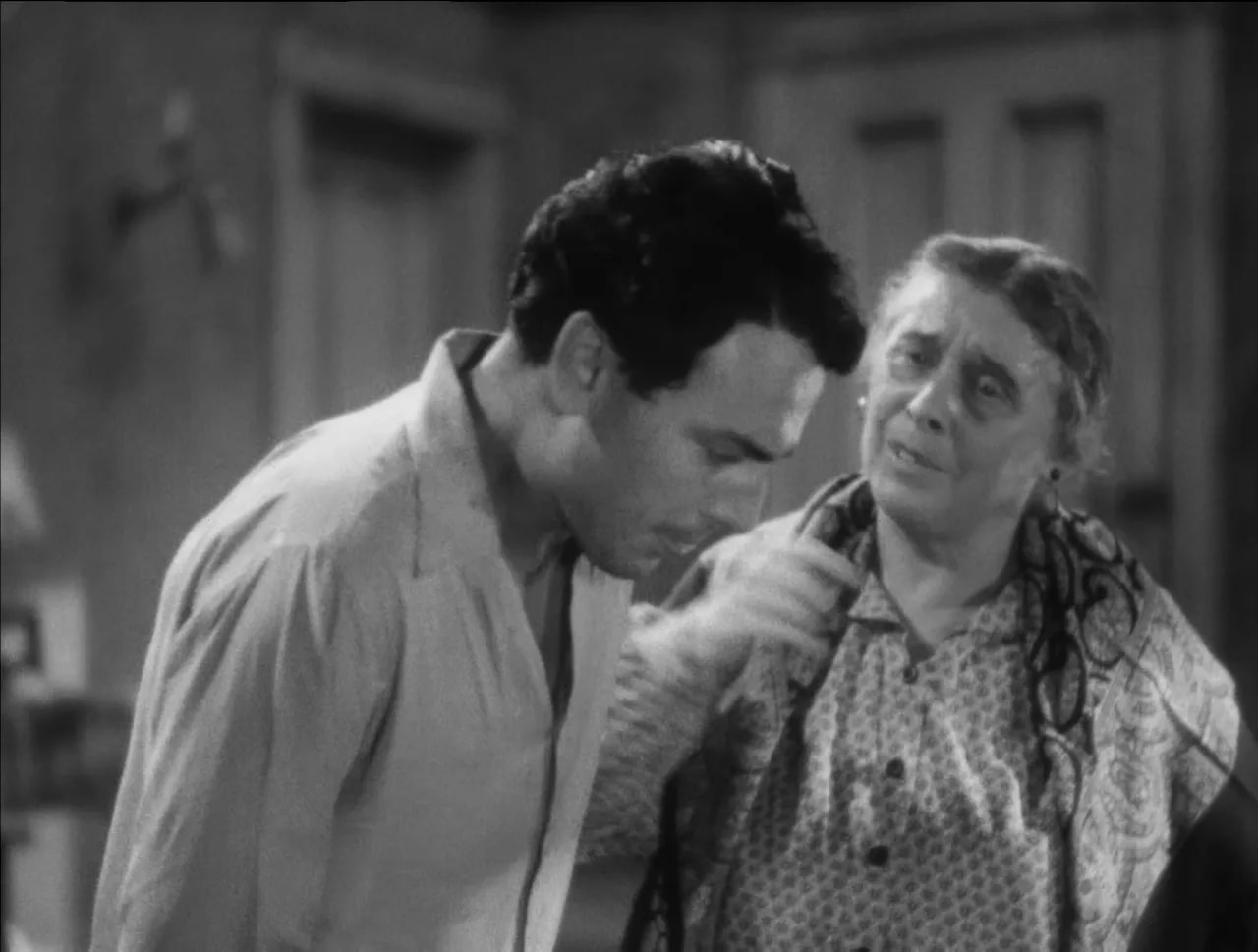
One of the most haunting stretches in the film belongs to Tony Passa, the gang’s driver. He is shaken by the robbery and especially by the killing. Unlike Rico, Tony feels the moral and psychological weight of what happened. His nerves fray. He cannot settle. He goes home, where his mother tries to comfort him with food and memories of his childhood and church life.
It is an unexpectedly tender sequence in a hard-edged picture. The mother remembers the boy he used to be, the choir, the candles, the innocence. Tony is trapped between that remembered self and the man gang life has made him. He finally runs toward the priest, desperate for release, but his own gang cannot risk what he might confess.
This is one of the film’s cruelest truths. Gangster systems feed on loyalty until fear replaces it. A man who knows too much becomes a danger no matter how long he has been useful. Rico’s rise depends not just on his nerve but on his willingness to erase weakness wherever he sees it, even in former allies.
From Sam’s Lieutenant to Sam’s Replacement
The power shift inside the gang comes after the McClure job. Sam Vettori is worried. He sees the risk, wants caution, and senses that the ground is moving under him. Rico senses it too, but for him this is not a warning. It is an opportunity.
He openly challenges Sam over authority and the division of money. The confrontation is pure gangster Darwinism. Sam is still nominally the boss, yet he can no longer command the room. Rico pushes, the other men read the room, and the balance changes. Sam is finished before he fully admits it.
This is one of the film’s great insights into criminal leadership. Rico does not inherit power through planning or institution. He seizes it by exposing hesitation. Once a boss appears uncertain, he is already half gone.
Sam’s later fate confirms the movie’s grim law. In this world, former chiefs do not retire. They become dead weight, liabilities, examples.
The Banquet Scene: A Crowning That Feels Like a Funeral in Advance
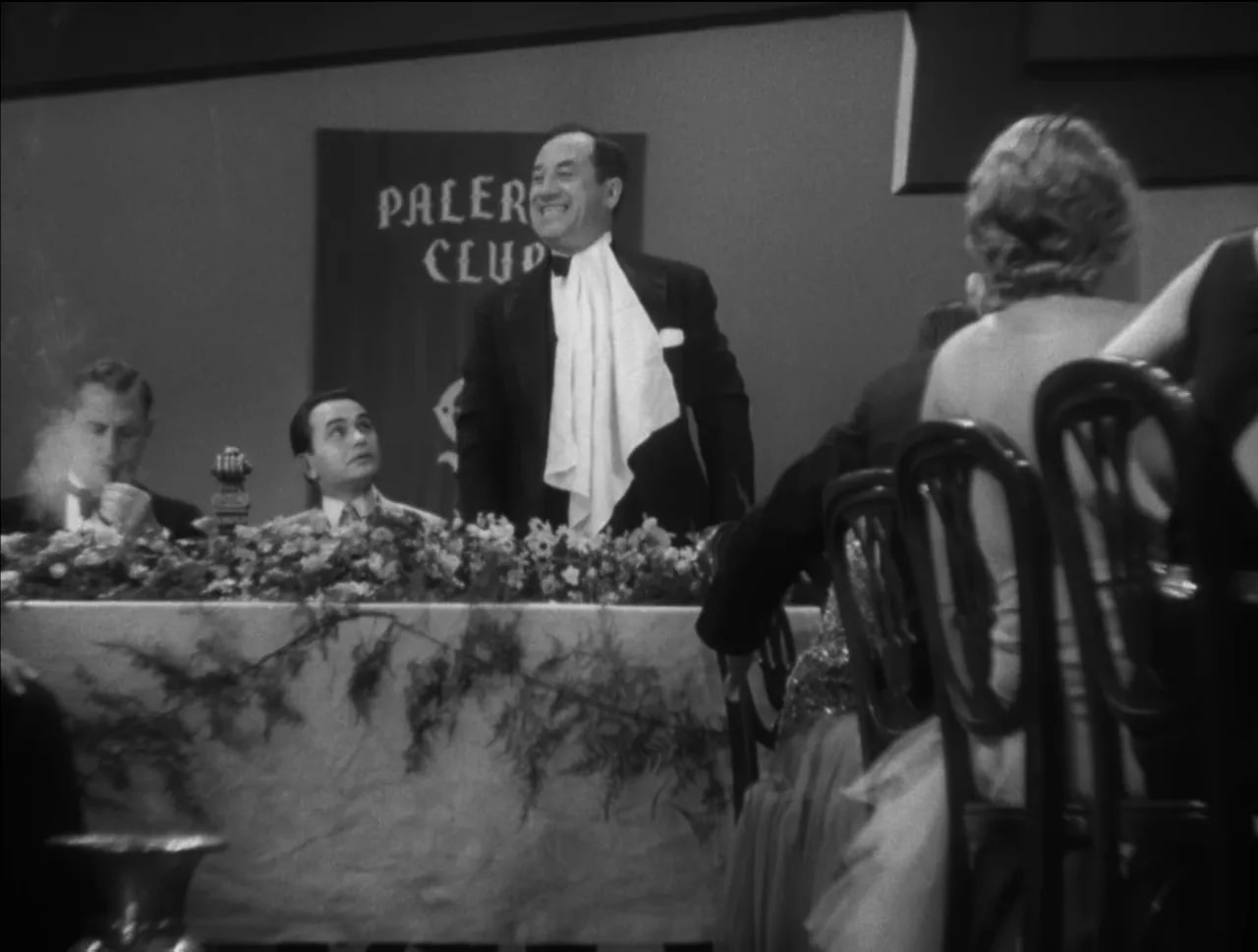
One of the most memorable passages in Little Caesar is the banquet held in Rico’s honor. This is where the film lets him enjoy the thing he has wanted from the start: public recognition. There are speeches, gifts, flowers, applause, photographs, and all the ceremonial nonsense that makes a hood feel like a king.
Rico loves every second of it.
He receives a watch from the boys. He basks in the compliments. He allows newspaper photographers to take his picture because he wants the city to see that he matters. It is one of the finest examples in early sound cinema of a criminal exposing himself through vanity.
The sequence is lively and funny on the surface, but it is also deeply revealing. Rico is not content to rule from shadows. He craves display. He wants visible proof that he has risen. In noir terms, he steps out of the darkness because his ego demands light.
That banquet is one reason this picture can be discussed alongside the later film noir movie tradition. It understands how self-advertisement becomes self-destruction. The hero-villain of urban crime does not merely commit acts. He performs identity, and performance leaves traces.
Sergeant Flaherty and the Pressure of the State
Opposite Rico stands Sergeant Flaherty, a cop who is less glamorous than the gangsters but no less important to the film’s machinery. He watches, waits, needles, and applies pressure. He understands that Rico’s kind eventually overreaches. Instead of trying to outswagger him, Flaherty relies on persistence, mockery, and timing.
There is a hard edge to the cop figure here that also anticipates noir. The law is not idealized. It is practical, sardonic, and patient. Flaherty knows Rico’s type and knows that pride can be used as a weapon against him.
That relationship reaches its climax later, but even in the middle sections the film keeps building a psychological duel between the gangster who must be seen as fearless and the policeman who knows fear is waiting underneath.
Little Arnie, Turf Wars, and Rico’s Next Ascent
Rico’s rise does not stop with taking Sam’s place. He starts cutting into the territory of rival boss Little Arnie Lorch. Arnie decides Rico has gone too far and arranges a hit. The attempt fails, only grazing Rico. That near miss leads to one of the film’s strongest demonstrations of gangster intimidation.
Rico and his armed men crash Arnie’s headquarters, take control of the room, and force him into a humiliating position. Rico gives him a choice: leave town or be carried out for good. Arnie folds and heads for Detroit.
For Rico, this is confirmation that all the so-called big men can be toppled. It feeds his belief that the larger the target, the greater the glory when it falls. He begins to feel invincible. Big Boy, recognizing Rico’s usefulness, goes even further and hands him the North Side territory that had belonged to Pete Montana.
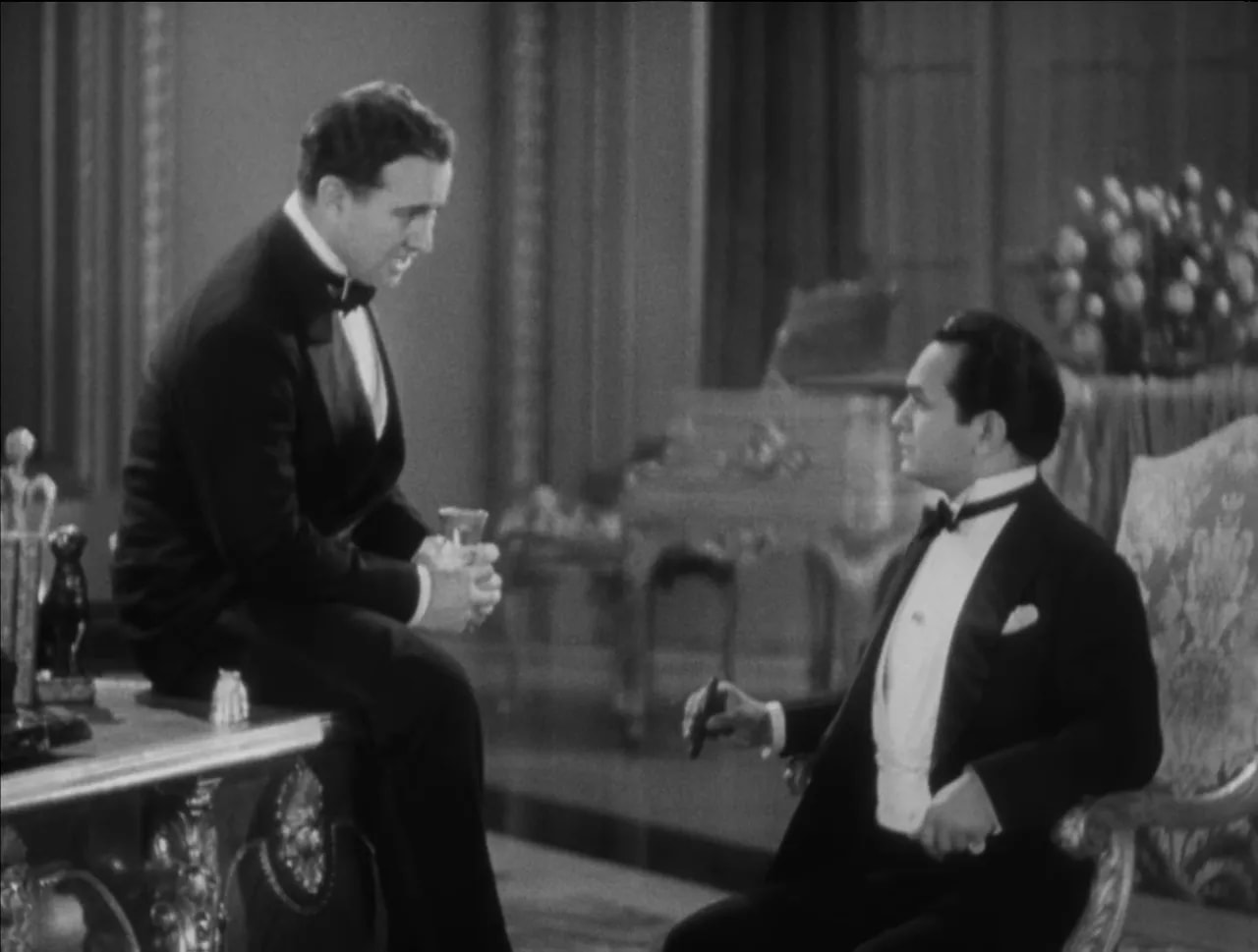
The scenes with Big Boy are excellent because they reveal the next layer of the hierarchy. Rico, dressed up and trying to show class, is still visibly out of place amid wealth and polish. He is both proud and awkward, thrilled by expensive furnishings and formal ritual. Yet he also hears exactly what he wants to hear: he is moving up.
Edward G. Robinson’s Performance Is the Engine of the Film
No discussion of Little Caesar can avoid the obvious. Edward G. Robinson is the reason the picture detonates. This was his breakthrough role, and it immediately made him a star. His Rico is compact, restless, vain, suspicious, and perpetually on the brink of violence. He carries himself like a man trying to force the world to recognize him.
Robinson does not play Rico as a grand mastermind. He plays him as a street-bred bundle of appetite and nerve. That is smarter and more enduring. Rico is compelling because he is not polished. He is all edge.
The performance helps explain why the film has remained so highly regarded. On Rotten Tomatoes it holds a 96% approval rating from 26 reviews, with an average rating of 7.5 out of 10. Critics continue to respond to Robinson’s intensity, and rightly so. He did not simply play a gangster. He gave Hollywood one of its foundational criminal archetypes.
Joe Massara Returns, and the Film Narrows to Something Personal
As Rico’s world expands, the story becomes less about territory and more about Joe. That is the movie’s sharpest move. Rico can face rivals and cops, but what truly unsettles him is Joe’s refusal to remain under his control.
Joe has stayed away from the gang, continuing his life as a dancer with Olga. Rico summons him back. The conversation begins almost warmly, with old-pal nostalgia and surface friendliness. Then the trap closes. Rico tries to belittle dancing as unmanly, frames Joe’s new life as softness, and insists they belong together because they started together.
Underneath all of that is a desperate fact: Rico needs someone he can trust, or thinks he does. He has climbed high enough to become isolated. Joe represents loyalty, memory, and the version of himself Rico cannot quite kill off emotionally. That is why this part of the film has always invited discussion. Rico’s attachment to Joe is stronger than ordinary gang convenience. Whether read as possessiveness, dependency, emotional fixation, or some combination of these, it deepens the tragedy.
For Joe, the choice is clear. He wants Olga and a future away from crime. Rico cannot accept that. If Joe chooses another life, Rico experiences it as betrayal.
Olga Becomes the Moral Center
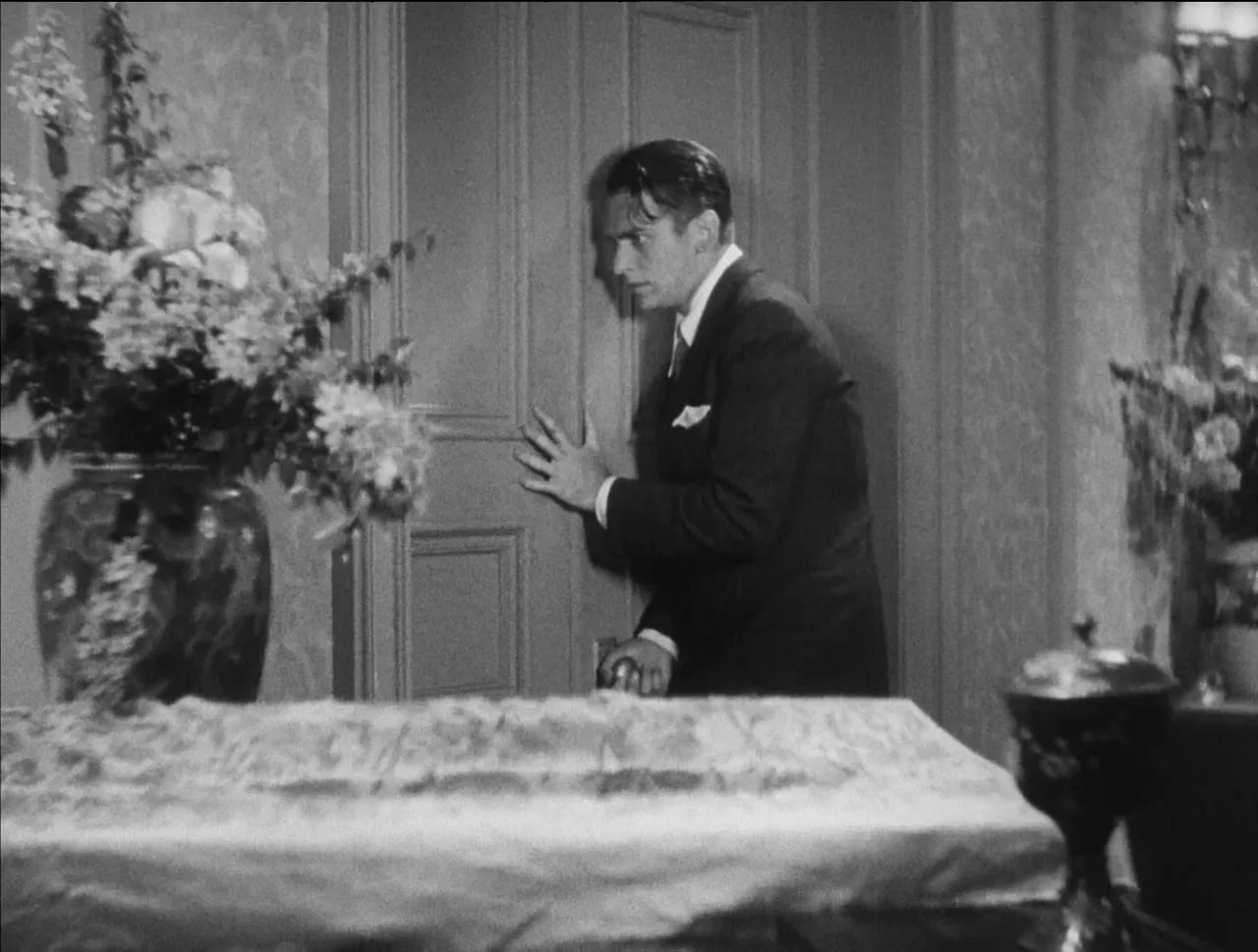
Olga sees the situation clearly before Joe does. Running will not solve it. Rico would keep coming. The gang has to be broken, and the only way is through the police. Joe hesitates because turning informer means entering another kind of death trap. Olga understands the danger, but she also understands that fear cannot be the final law.
Her decision to call Flaherty is one of the movie’s most consequential acts. It is practical, brave, and rooted in the simple demand for a life not ruled by gang terror. In a crime picture dominated by male codes of power and pride, Olga cuts through the nonsense. She chooses survival and truth over ritual loyalty to killers.
Rico Cannot Kill Joe, and That Tells the Whole Story
When Rico and Otero arrive, the film reaches its emotional peak. Joe is ready to talk. Rico knows what that means. Any cold-blooded gang boss in total command of himself would eliminate the risk immediately. Rico cannot do it.
This is the crucial revelation of the film. For all his boasting, all his posturing, all his claims of being harder than everyone else, he freezes at the one act that would prove his complete commitment to his own criminal logic. Joe matters too much.
Otero tries to do the job himself, Joe is wounded, and the whole structure collapses. Police move in, Otero is killed, and with Joe and Olga cooperating, Rico’s organization begins to disintegrate.
The moment is devastating because it exposes Rico’s contradiction. He has spent the entire film insisting that softness is fatal, love is weakness, and loyalty means obedience. Yet when forced to choose between power and the one person he actually cares about, he falters. The gangster code defeats itself.
This kind of inward fracture is pure fuel for the later film noir movie. Noir thrives on men who construct identities too rigid to survive their own buried feeling. Rico is one of the earliest and strongest examples.
The Collapse: No Gang, No Glory, No Illusion Left
After Joe talks, the police crush the Palermo gang. Men are rounded up. Sam is captured. Otero is dead. Rico becomes a fugitive. He turns up in a flophouse, reduced from banquet guest of honor to ragged nobody again.
The movie is merciless here. It strips away every decorative layer of gang prestige and leaves only the gutter Burnett had always meant as Rico’s true point of origin and destination. Newspaper reports describe him as frightened and broken. Sergeant Flaherty publicly mocks him, saying he boasted about being able to handle anything, yet folded when real danger came.
This taunt is not just public relations. It is a trap, and Flaherty knows exactly whom he is dealing with. Rico can endure poverty, danger, and hiding. What he cannot endure is humiliation.
If someone wants to explore more titles built around that same fatal mix of ego and doom, the archive at https://filmnoir.top/search is a useful place to continue through related crime and noir-era classics.
The Telephone Call That Kills Him
Rico’s final mistake is perfectly in character. Enraged by newspaper accounts calling him yellow, he telephones Flaherty directly to protest and threaten revenge. It is absurd, reckless, and absolutely right for this character. Even in hiding, with everything gone, he still needs to defend the legend of Rico.
Flaherty keeps him talking while tracing the call. The police close in on the flophouse. Rico refuses surrender and takes cover behind a billboard advertising Joe and Olga as dancers. It is one of the film’s finest visual ironies. The life Rico mocked, the life he tried to destroy, literally towers over his last stand.
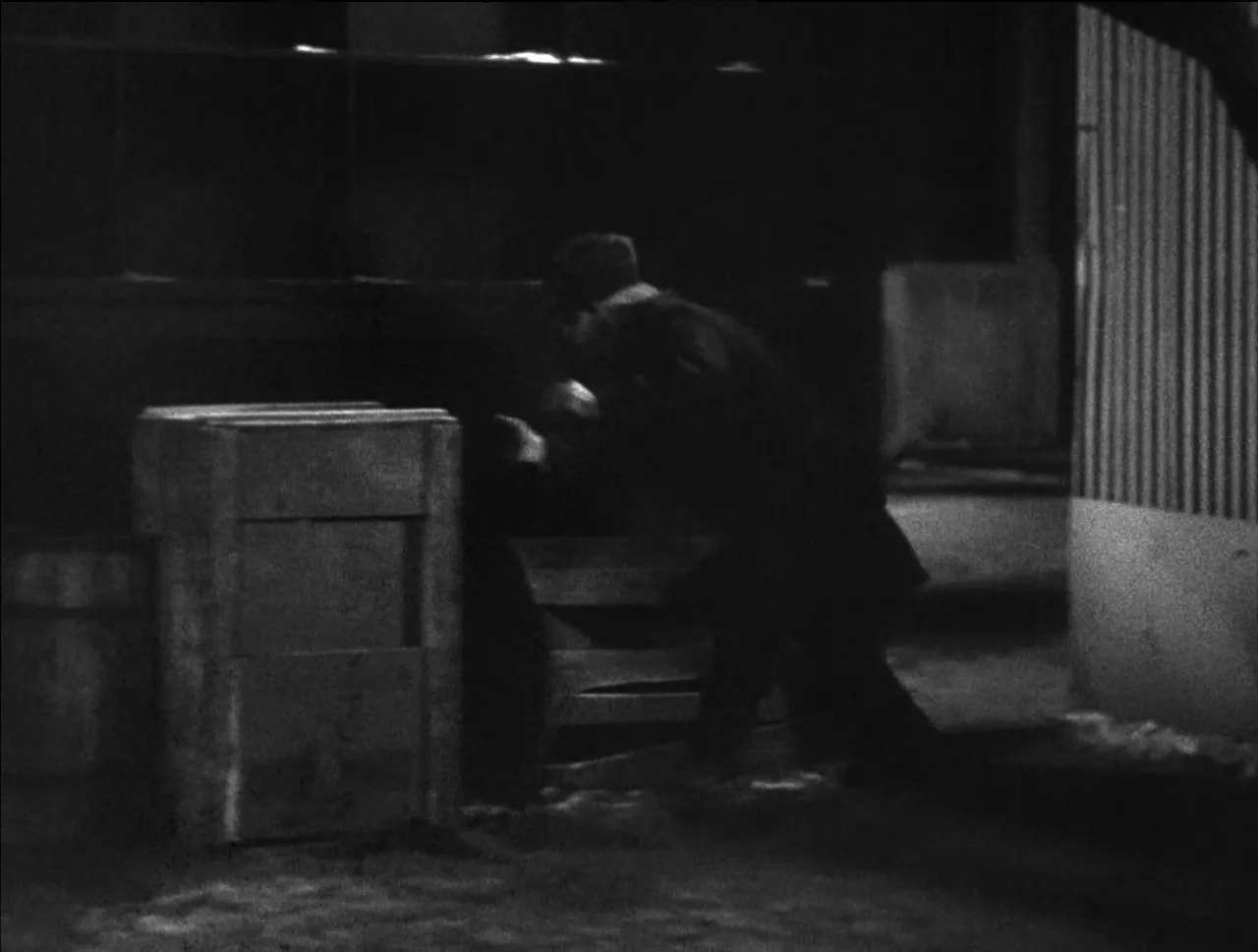
Given one final chance to come out and be arrested, he chooses the gun. Flaherty shoots him. Dying, Rico finally voices astonishment that his story is ending at all. It is one of the most famous endings in early American crime cinema and remains one of the greatest closing notes in any proto-film noir movie or gangster classic.
Why Little Caesar Still Matters
The film’s reputation is secure for good reason. It was nominated at the 4th Academy Awards for Adapted Screenplay. In 2000, it was selected for the National Film Registry by the Library of Congress. The American Film Institute honored it repeatedly, including ranking Rico among great screen villains and listing the picture among top gangster films. The famous final line entered AFI’s list of major movie quotes.
Its larger legacy is even more important. Alongside The Public Enemy and Scarface, it helped establish the gangster genre as one of Hollywood’s most potent forms. It showed that audiences would not just tolerate a criminal protagonist but be riveted by him. It also proved that rise-and-fall structure, urban violence, and psychological rot could create something larger than sensationalism.
This is where the connection to the film noir movie tradition becomes especially valuable. Little Caesar is not noir in the strict historical sense. It belongs to the pre-Code gangster cycle. But many noir essentials are already here:
- A driven antihero whose ambition becomes self-destruction
- An urban world shaped by corruption, anxiety, and power struggles
- Moral claustrophobia in which every choice narrows rather than liberates
- A fatal contradiction inside the main character
- A bleak ending that reveals how false the dream always was
That is why this movie still belongs in conversations about the film noir movie canon, even if its official label is gangster or pre-Code crime. Noir did not appear out of nowhere. It inherited attitudes, structures, and shadows from films like this one.
From Burnett’s Gutter Macbeth to a Hollywood Archetype
W. R. Burnett described Rico as a kind of gutter Macbeth, a figure produced by a violent society and doomed by his own impulsive ambition. That is exactly what the film preserves best. Burnett may have felt the adaptation conventionalized parts of his novel, but he also believed Robinson saved it, and history has proven him right.
Rico is not tragic because he is noble. He is tragic because he is so small and wants so much. He reaches for grandeur with the tools of a thug. He is incapable of inner growth, so every outward success becomes another step toward ruin.
That idea has traveled far beyond 1931. It echoes through gangster films, noirs, antihero dramas, and crime epics for decades afterward. Once Hollywood found this figure, it never really let him go.
Final Verdict
Little Caesar is compact, fast, influential, and still sharply entertaining. More importantly, it is one of the foundation stones of American crime cinema. Edward G. Robinson’s Rico is not merely a memorable gangster. He is one of the original screen portraits of ambition as self-annihilation.
For anyone interested in the evolution of the film noir movie, this film is not optional background material. It is part of the bloodline. It shows where noir’s criminal psychology, masculine anxiety, and fatal pride began taking durable shape in studio-era Hollywood.
That is why the film still lands. Beneath the snappy talk and machine-gun bravado lies a brutally simple truth: a man can claw his way upward, terrify everyone around him, and still discover too late that he never had the strength he claimed. Rico wanted to be somebody. Little Caesar shows exactly what that dream cost him.
Readers building a deeper classic-crime watchlist can also browse the wider noir and crime archive at https://filmnoir.top/category-sitemap.xml for related films from the 1930s through the height of noir.